Call Us
Are You Protected? The Truth About Termite Risk on the NSW North Coast
What Most Homeowners Don’t Know Could Cost Them Thousands
If you live anywhere on the NSW North Coast — from Coffs Harbour to Lismore, Grafton to Maclean — your home could be at risk from termites right now. And chances are, you wouldn’t know it.
The termite threat in this region isn’t just “high”. It’s among the worst in Australia. Warm, humid weather, leafy gardens and timber-heavy construction all create perfect conditions for termite colonies to thrive right around your property.
Some homeowners underestimate the danger. Others assume they’re protected when, in reality, their barrier has expired or was never installed properly in the first place.
So how exposed is your home really?
Why Are Termites Called “Silent Destroyers”?
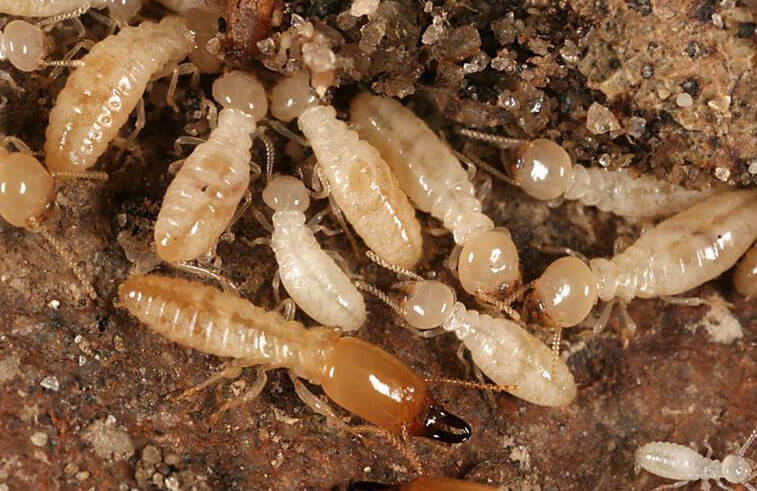
Australia has more than 300 species of termites. Only a few cause major damage, but those that do — especially subterranean termites like Coptotermes — are responsible for most of the costly structural repairs we see on the North Coast.
They live in underground nests and travel through mud tunnels to find timber and moisture inside buildings. Once they’re in, they prefer to stay hidden:
- They work in dark, concealed spaces.
- They eat the inside of timber first, leaving a thin outer shell.
- They can feed for months or even years before obvious signs appear.
By the time you notice hollow-sounding skirting boards, sagging floors or bubbling paint, the damage is usually well advanced.
And one of the most painful points for homeowners? Standard home insurance in Australia does not cover termite damage. If termites get in, the repair bills are yours.
Why Is the NSW North Coast Such a High-Risk Termite Zone?
The CSIRO and Australian pest experts classify the NSW North Coast as a very high termite risk area. That’s not a scare tactic — it’s based on decades of data and local conditions.
This region is so risky because:
- The warm, wet climate speeds up breeding and foraging. Termites stay active for more of the year.
- Lush, timber-rich gardens and yards provide constant food sources close to buildings.
- Sandy loam and clay soils make tunnelling fast and easy.
- Older homes and renovations often leave gaps where protection is missing or compromised.
From a weatherboard in Woolgoolga to a modern brick home in Ballina, the environmental pressure from termite colonies is constant. The question isn’t whether termites are nearby — it’s whether your home is protected against them.
What Happens If You’re Unprepared?
Termite damage isn’t just inconvenient or messy — it can be structurally dangerous and financially devastating.
When termites attack the structural timbers of a home, you can end up with:
- Floors that sag or feel spongy underfoot.
- Walls that bow, crack or separate from ceilings.
- Roof structures that are no longer safe or properly supported.
- A property history that worries buyers and drags down your sale price.
If barriers are missing, expired or not maintained, you may also find that builder warranties are at risk. Without a proper termite management plan, you’re effectively gambling with both your home’s safety and your long-term finances.
Which Common Myths Put Homeowners at Risk?
On the North Coast, we hear the same dangerous assumptions again and again.
“My home was sprayed years ago, so I’m fine.”
General sprays wear off quickly. They might kill termites that are present at the time, but they don’t provide long-term protection or stop new colonies from attacking later.
“My home is brick, so termites won’t bother it.”
Termites don’t eat bricks — but they do eat the timber frame, flooring, roof structure and skirting boards inside a brick veneer home. Brick on the outside is not protection on its own.
“I can’t see any signs, so there must be no termites.”
Termites specialise in staying hidden. They travel through soil, cavities and wall voids, and they eat timber from the inside out. By the time you see obvious signs, they’ve usually been active for a long time.
“My home is new, it should be covered.”
Most new homes have some form of termite management installed, but chemical components often have a limited life – commonly around 3–5 years if not maintained. Renovations, landscaping or plumbing changes can also compromise protection without the owner realising.
These myths create a false sense of security — and that’s exactly what termites rely on.
What Does Real Termite Protection Look Like?
Real protection on the NSW North Coast is never “just a spray”. It’s a combination of the right barrier system and regular, professional inspections.
In practical terms, that usually means:
Chemical barriers – trench and treat / trench and drench systems
For existing homes, this is one of the most common approaches. A licensed technician:
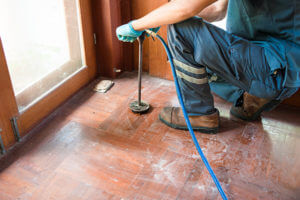
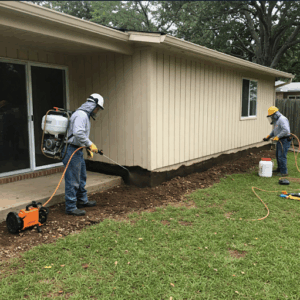
- Digs a continuous trench around the perimeter of the home (and sometimes along internal footings or subfloor walls).
- Treats the exposed soil with a non-repellent termiticide, carefully mixed to the correct rate.
- Backfills the trench with the treated soil, effectively creating a treated “zone” termites must pass through to reach the structure.
Because the product is non-repellent, termites don’t detect it. They travel through treated soil, pick up the active ingredient on their bodies and carry it back to the colony, helping to eliminate the nest. In some situations, a reticulation system may be installed so the treated zone can be replenished in future without re-digging the entire trench.
This trench-and-drench style barrier is very different from a quick surface spray — it’s designed as a long-term protective zone around your home.
Physical barriers
Installed during construction, these use materials like stainless steel mesh, graded stone or specialised sheeting to block concealed entry points. They don’t kill termites, but they force them out into visible areas where they’re easier to spot and deal with.
Annual inspections
Even with a barrier, yearly inspections are critical on the North Coast. Barriers can be bridged by garden beds, breached by building changes or slowly lose effectiveness over time. Regular checks find problems early, before they turn into large-scale structural repairs.
It’s this combination — barriers plus inspections — that professionals rely on to protect homes in a very high-risk zone.
If you’re unsure which type of barrier would suit your place, you can always contact Hugh at Detecta Pest for straight, practical advice based on your home and location.
What Can You Learn from a Real Grafton Termite Case?
Here’s a typical example of how quickly things can escalate when there’s no effective barrier in place.
A homeowner in Grafton heard faint clicking noises behind a laundry wall. They ignored it, assuming it was just pipes or the house “settling”. A few months later, the laundry floor started to warp and feel uneven.
When a full termite inspection was finally carried out, it found a large subterranean termite infestation tracking in from a garden bed built directly against the external wall. There was no active termite barrier protecting the property.
- Cost of repairs: around $25,000
- Insurance payout: $0 (termite damage excluded)
- Age of the home: just six years old
This kind of story isn’t rare on the NSW North Coast. We see versions of it every year.
Why Do Locals Trust Detecta Pest with Termite Protection?
Detecta Pest has been protecting homes across the North Coast for years. We work in the same climate you live in, and we deal with the same local termite species, soils and building styles every day.
When you engage us for termite protection, you’re getting:
- Technicians experienced specifically in termite work, not just general pests.
- Advanced detection tools and thorough inspection methods.
- Tailored barrier systems designed for your home, soil type and risk level.
- Fully licensed and insured service, compliant with AS 3660 termite management standards.
- Clear reporting and ongoing monitoring, so you always know where you stand.
If you’re worried about your own home or just want to know where you stand, you can contact Hugh at Detecta Pest for a no-nonsense chat about your options.
From Lismore and Goonellabah through Maclean, Yamba, Grafton and Coffs Harbour, we help homeowners get ahead of termite problems instead of constantly reacting to them.
What Steps Should You Take Right Now?
If you’re not sure whether your home is actually protected, here’s a simple plan:
- Book a professional termite inspection – In most cases it takes around an hour for a standard home and gives you a clear picture of your current risk.
- Check your barrier status – Find out whether you have a barrier, what type it is, when it was installed and whether it’s still effective.
- Install or refresh your barrier – If protection is missing, expired or compromised, put the right system in place before termites do.
- Stay proactive – Keep gardens, mulch and timber away from external walls, fix leaks quickly and lock in annual inspections.
If you’re unsure where to start, just reach out to Hugh and the team at Detecta Pest and they can walk you through it step by step.
A few small, proactive steps now can prevent a very large, very expensive problem later.
Where Should You Go Next If You Want to Stay Ahead of Termites?
On the NSW North Coast, termite damage isn’t a “maybe one day” problem. For unprotected homes, it’s much closer to a “when”.
The good news? With the right barrier and regular inspections, you can dramatically reduce the risk.
From here, you’ve got two smart next steps in this series:
- Read Blog 2 – “Is Your Home a Termite Magnet? Why Barriers Are Your First Line of Defence on the NSW North Coast” to understand the everyday features that attract termites and how a barrier system fits in.
- Or jump ahead to Blog 10 – “How Do You Choose the Right Termite Barrier and Protection Plan for Your North Coast Home?” for a clear guide on comparing options and deciding what makes sense for your property.
Either way, the most important step is simple: don’t wait for visible damage before you act.