Call Us
Is Your Home a Termite Magnet? Why Barriers Are Your First Line of Defence
The Conditions That Make Termites Target Your Property
If you live on the NSW North Coast, you’re already in prime termite territory. From Coffs Harbour to Grafton, Maclean and Lismore, the climate, soil and building styles all work in the termites’ favour. These pests cost Australians billions in structural damage each year — usually quietly, and usually without warning.
So the real question is: is your home a termite magnet – and if it is, what are you doing to stop them?
What Conditions Attract Termites to a Home?
Termites aren’t random. They are drawn to a few simple conditions that are very common around North Coast homes.
Moisture is at the top of the list. Poor drainage, leaking taps, air-conditioning drips, overflows and condensation around pipes all create damp spots in soil, garden beds and subfloors. Termites need moisture to survive, so they tunnel towards it.
Timber in contact with soil makes things even easier for them. Untreated fence posts, garden edging, old stumps, timber retaining walls or subfloor timbers touching the ground can act like a bridge straight into the structure.
Then there’s warmth and shelter. In Coffs Harbour, Grafton, Maclean and Lismore, the warm, humid conditions allow termites to stay active for much of the year. Timber framing, insulation, flooring voids and other concealed spaces give them protected galleries where they can feed undisturbed.
Finally, homes with no termite management system and no regular inspections are simply easier targets. From a termite’s point of view, that’s a free run.
When you put all that together — moisture, timber, warmth, shelter and no barrier — you have a classic termite magnet.
Why Are Termites So Dangerous for North Coast Homes?
Termites are small, but the damage they cause is anything but.
They work from the inside out, eating the internal structure of timbers while leaving a thin outer skin. Doors can still close, paint can still look fine, and floors can still be walked on — while termites quietly hollow everything out underneath.
By the time you see sagging floors, hollow-sounding skirting boards, cracking or bubbling paint, or doors and windows that suddenly start sticking, the infestation has usually been active for months or years.
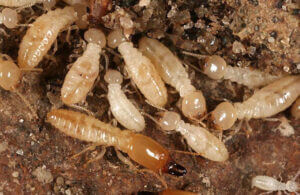
They don’t clock off at 5pm. Termites feed 24 hours a day, 7 days a week. A single well-established subterranean colony can contain hundreds of thousands, sometimes up to a million termites, all focused on finding timber and moisture.
On the NSW North Coast, that combination of constant pressure and hidden activity is exactly why having a proper barrier in place is so critical.
What Exactly Is a Termite Barrier?
A termite barrier is a management system designed to stop or intercept termites before they reach the timber in your home. It doesn’t sit on the wall like a shield; it sits in and around the structure, where termites would normally try to sneak through.
There are two main types:
Physical barriers
These are usually installed during construction. They’re made from materials such as stainless steel mesh, graded stone or specialised sheeting. The goal is to block concealed termite entry points around slab edges, pipe penetrations and other junctions, and to force termites to move into visible areas where they can be detected during inspections.
Chemical barriers – trench and treat (“trench and drench”) systems
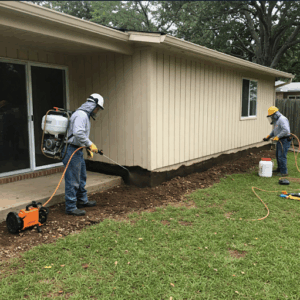
For existing homes, chemical barriers are one of the most common solutions. A licensed technician:
- Digs a continuous trench around the external perimeter of the home (and, if needed, along internal footings or subfloor walls).
- Treats the exposed soil with a carefully mixed, non-repellent termiticide.
- Backfills the trench with the treated soil, creating a treated zone termites must pass through to reach the structure.
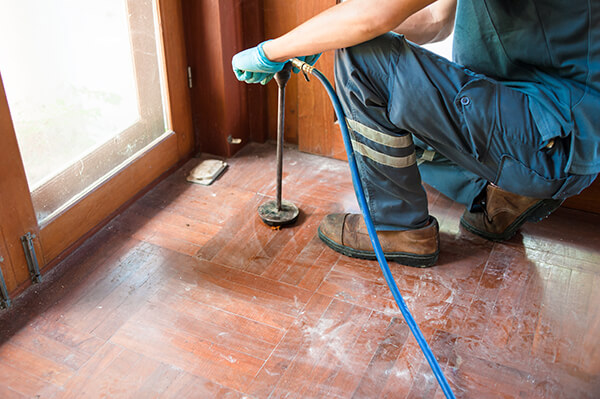
Because the product is non-repellent, termites don’t detect it. They move through treated soil as normal, pick up the active ingredient, and carry it back through their tunnels, spreading it through the colony. In some cases a reticulation system is installed, allowing the treated zone to be replenished in future without re-excavating.
Both physical and chemical barriers are designed to work together with regular inspections — not instead of them.
Why Should a Barrier Be Your First Line of Defence?
On the NSW North Coast, waiting until you see termites is like waiting until after a crash to put your seatbelt on.
A barrier gives you:
- Early protection – It intercepts termites before they reach structural timbers.
- Invisible defence – It works quietly in the background; you don’t have to remember to “switch it on”.
- Cost control – The cost of installing or refreshing a barrier is usually a fraction of the cost of major structural repairs.
- Peace of mind in a high-risk zone – In areas classified as very high risk, having a documented termite management system is simply smart ownership.
For many homes, a trench-and-treat chemical barrier around the perimeter is the most practical way to put that first line of defence in place. For new builds, physical barriers installed during construction are often combined with treated zones later on.
Either way, the barrier is your starting point, not an optional extra.
Do You Still Need a Barrier If You’ve Never Had Termites?
Yes. In fact, if you’ve never had termites, now is exactly the right time to think about a barrier.
Termites don’t care whether a home has had issues before. They don’t check suburb histories or owner intentions. They follow moisture, warmth and timber. Many of the worst infestations we see are in homes where the owner says, “We’ve been here for years and never had a problem until now.”
A termite barrier is like a seatbelt: you hope you never need it, but if something happens, you’ll be very glad it’s there. On the North Coast, “we’ve never seen termites” is not a protection strategy.
If you’re unsure what’s currently protecting your place, that’s a good sign it’s time to talk to someone who can tell you for sure.
What Signs Could Mean You Already Have Termites?
Some of the warning signs that should trigger an urgent inspection include:
- Mud tubes or mud tracking on walls, piers or foundations.
- Timber that sounds hollow when tapped.
- Cracked, blistering or bubbling paint, especially near skirtings and window frames.
- Doors and windows that suddenly start sticking for no obvious reason.
- Swarming insects inside or discarded wings near windowsills.
None of these automatically prove termites are present, but together they add up to a strong reason to get a professional opinion — quickly. The sooner an infestation is found, the more of the structure can often be saved.
Why Is the NSW North Coast Such a High-Risk Region?
From Coffs Harbour to Lismore, the North Coast offers almost everything termites like:
- A warm, humid climate that keeps them active for longer each year.
- Timber-heavy construction and renovations.
- Gardens and landscaping close to external walls.
- Soils that are easy to tunnel through.
That’s why homes here are treated as high-risk by builders, insurers and pest professionals. It’s also why doing nothing is one of the riskiest choices you can make.
Who Should You Speak to About Installing a Barrier?
If your home has timber, warmth and moisture — and nearly all do — it could be attracting termites right now, whether you can see them or not.
A professionally designed and installed barrier is the most reliable way to reduce that risk. At Detecta Pest, we design termite barrier systems for all types of North Coast homes: new builds, older houses, slab-on-ground, subfloor, and tricky renovations that have been altered over the years.
If you’re unsure whether your home is a termite magnet or what kind of barrier would suit your property, you can contact Hugh at Detecta Pest for straight, practical advice. He can explain your options in simple terms and lay out a plan that matches your budget and risk level.
Where Should You Go Next in This Series?
If you’d like to understand just how serious the risk is in our region, it’s worth reading back to Blog 1 – “Are You Protected? The Truth About Termite Risk on the NSW North Coast”, which explains why our area is classed as very high risk and why insurance won’t save you from termite damage.
Then, to see how barriers stack up financially, the next article, Blog 3 – “How Do Termite Barriers Save Grafton, Maclean, Coffs Harbour & Lismore Homeowners Thousands in Repairs?”, walks through the real-world cost difference between installing a barrier and paying for structural repairs after termites have already moved in.