Call Us

Think Your Termite Spray Is Enough? Here’s Why You Still Need a Barrier
Why Quick Fixes Can Leave Your Home Exposed
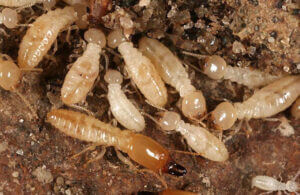
When homeowners on the NSW North Coast see something that looks like termites — or they just get a bad feeling — the first instinct is often to grab a can of “termite spray” from the hardware store. It feels fast, cheap and satisfying. A few squirts, some dead insects, and the problem looks solved.
But here’s the uncomfortable truth: termite spray on its own is not protection. Not even close. In a high-risk area like Coffs Harbour, Lismore, Grafton or Maclean, relying on spray alone can give you a false sense of security while termites keep working where you can’t see them.
So what’s really going on when you use spray — and why do you still need a proper barrier?
Why Do So Many Homeowners Trust Termite Sprays?
Sprays are popular for one simple reason: they’re easy. You can buy them in minutes, point, spray, see insects die, and feel like you’ve taken control of the situation.
The problem is, that’s where the benefits stop.
Sprays only treat what you can physically see and reach. They don’t get inside wall cavities, under floors, into roof voids or deep into the soil where subterranean termites live and travel. They don’t find the nest, and they don’t protect the rest of the structure from future attacks.
Killing a handful of termites with spray is a bit like stepping on a few ants on the path. It doesn’t do anything to the main colony living under the slab, in the garden or out in the yard.
What’s the Real Difference Between Sprays and Termite Barriers?
If you compare sprays and barriers side by side, you quickly see they’re not even playing the same game.
Sprays are short-term, surface-level tools. They kill termites on contact in the spot you spray and then start to break down. Sunlight, rain, heat and time all reduce their effect. They don’t reach hidden galleries, they don’t travel back to the nest and they don’t provide ongoing protection.
Termite barriers are long-term, structural protection systems. They’re designed around how termites actually move and behave:
- Chemical barriers use non-repellent termiticides in the soil around your home, often via a trench-and-treat (trench-and-drench) method. Termites pass through treated zones without realising, pick up the active ingredient and carry it back through the colony, helping to eliminate the nest.
- Physical barriers are installed during construction using stainless steel mesh, graded stone or specialised sheeting to block hidden entry points and force termites into visible areas.
In both cases, the goal is the same: stop termites before they get into the structure, or expose them early enough that they can be dealt with before serious damage is done.
Sprays are reactive. Barriers are proactive.
What Misconceptions About Sprays Put Homes at Risk?
A few common beliefs keep people stuck with spray-only “protection” that doesn’t really protect them at all.
“I can’t see termites anymore, so the spray worked.”
Termites prefer dark, sealed spaces. They’re experts at avoiding light and open air. Just because you can’t see activity after spraying doesn’t mean it’s gone — it often just means they’ve retreated deeper into the structure or found another path.
“The spray protects my home.”
Even products labelled “preventative” wear off quickly. Outdoor conditions and soil movement break them down. They don’t form a continuous treated zone that termites must pass through, and they don’t last for years the way a professionally applied barrier is designed to.
“Sprays are cheaper, so I’m saving money.”
Up front, a can of spray is cheaper than a barrier installation. But if spray-only “protection” lets an infestation keep going unseen, the eventual repair bill can be tens of thousands of dollars. When you compare that to the cost of a proper barrier spread over its life, the cheap option starts to look very expensive.
What Exactly Is a Termite Barrier?
A termite barrier is a planned, long-term defence system that either blocks or kills termites before they reach the timber in your home. Where a spray is a quick reaction to what you see today, a barrier is designed to manage the risk you can’t see tomorrow.
There are two main types:
Physical barriers
These are usually installed during construction. Stainless steel mesh, graded stone or specially designed sheeting is placed around slab edges, pipe penetrations and other key points. The idea is to make concealed entry paths impossible, so termites are forced out into the open where they can be discovered during inspections.
Chemical barriers – trench-and-treat systems
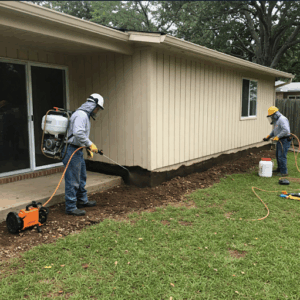
For existing homes in places like Coffs Harbour, Grafton, Maclean and Lismore, chemical barriers are one of the most practical solutions. A licensed technician:
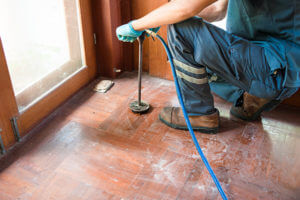
- Digs a continuous trench around the perimeter of the home (and sometimes along internal footings or subfloor walls).
- Treats the exposed soil with a precisely mixed, non-repellent termiticide.
- Backfills the trench with the treated soil, creating a continuous treated zone around the structure.
Termites foraging through the soil can’t detect the product. They move through treated areas as normal, pick up the active ingredient and carry it back into their hidden tunnels and nest. In some cases, a reticulation system is also installed, allowing the treated zone to be replenished in future without re-excavating.
Unlike spray, a barrier is built to provide long-lasting protection when combined with regular inspections.
How Is This Like Fire Safety?
The easiest way to picture the difference is to think in terms of fire safety.
Sprays are like fire extinguishers. You grab them when you have a visible problem and you try to put it out on the spot. They’re useful in an emergency, but they don’t stop fires from starting in the first place.
Barriers are like fireproofing and smoke alarms. They’re built into the structure and designed to prevent major problems and warn you early if something goes wrong.
You wouldn’t rely only on a fire extinguisher to protect your house from fire — not without smoke alarms, safe wiring and good design. In the same way, relying only on spray to protect your biggest investment from termites doesn’t make sense, especially in one of Australia’s highest-risk areas.
Why Do Barriers Give Real Peace of Mind on the North Coast?
On the NSW North Coast, the warm, humid climate means termites can be active for much of the year. Timber-heavy construction, lush gardens and easy-to-dig soils don’t make life any easier for homeowners.
A properly installed barrier gives you:
- Continuous protection – It’s always there, even when you’re not thinking about termites.
- A clear inspection routine – Annual inspections pick up any bridging, breaching or early activity before it becomes major damage.
- Compliance and documentation – Systems designed and installed to current standards help with building code requirements and can make future sales easier.
- A better long-term financial position – You’re investing in prevention rather than hoping you can afford repairs if something goes wrong.
Add a bit of simple maintenance — fixing leaks, managing drainage, keeping gardens and mulch away from external walls — and you have a solid, multi-layered defence that spray alone can’t match.
What’s the Final Takeaway for North Coast Homeowners?
Sprays are reactive. You see something, you spray it, you hope for the best.
Barriers are proactive. They’re designed to stop termites before they reach the structure, or to expose them early enough that you can take action without facing massive repair bills.
If you’ve been relying solely on spray, you’ve only been dealing with the tip of the problem. The only realistic way to protect a home long-term in Coffs Harbour, Lismore, Grafton, Maclean and the surrounding areas is with a professionally designed and installed termite barrier, backed up by regular inspections.
Where Can You Get Expert Protection (Beyond Just Spray)?
At Detecta Pest, we install and maintain termite barrier systems for homes right across the NSW North Coast. Whether your property is slab-on-ground or subfloor, old or new, we can design a barrier system around your specific construction, soil type and risk level.
If you’ve been leaning on spray and you’re not sure what’s really protecting your home, you can contact Hugh at Detecta Pest for practical, local advice. He can assess your current situation, explain your options in plain language and map out a sensible plan for putting a proper barrier in place.
What Should You Read Next in This Series?
If you’d like to see how the numbers stack up, Blog 3 – “How Do Termite Barriers Save Grafton, Maclean, Coffs Harbour & Lismore Homeowners Thousands in Repairs?” looks at the financial side of prevention versus repair.
From there, you can move on to Blog 5 – “What Builders and Inspectors Know About Termite Barriers (That You Should Too)”, which explains how the professionals think about barriers when they’re signing off on homes — and why that mindset can save you from costly mistakes.