Call Us
What Builders and Inspectors Know About Termite Barriers (That You Should Too)
Why the Experts Never Leave Protection to Chance
If you’ve bought, built or renovated a home in Australia — especially in termite-prone areas like the NSW North Coast — you’ve probably heard the term termite barrier more than once.
A lot of homeowners still treat barriers as “nice to have”. Builders and pest inspectors don’t. They treat them as non-negotiable.
Why? Because they’re the ones who see inside the walls, under the floors and behind the plaster. They’ve seen what happens when barriers are missing or ignored — and they’ve seen how well they work when they’re designed and maintained properly.
So what do they know that you should know too?
Why Do Experts Take Termites So Seriously?
Ask any experienced builder or inspector and you’ll hear the same thing: termites cause more damage in Australia each year than fire, floods and storms combined.
On the NSW North Coast — Coffs Harbour, Grafton, Lismore, Maclean and the surrounding areas — the risk is even higher. Warm, humid conditions and timber-framed construction mean termites have everything they need.
Builders see the structural side of that damage: wall frames eaten from the inside, floors that have to be replaced, roof timbers that are no longer safe. Inspectors are often the ones who deliver the bad news to owners — repair estimates in the tens of thousands, with no help from insurance, because termite damage isn’t covered.
That’s why, in their world, barriers aren’t an optional extra. They’re part of basic risk management.
Why Do Builders Always Include Termite Barriers?
Under the National Construction Code (NCC) and Australian Standard AS 3660, new homes in termite-prone areas must include an approved termite management system. For builders on the North Coast, that’s not just about ticking a box — it’s about building something that will last.
Builders know that:
- Termite damage is often invisible at first. By the time you see obvious signs, the structure can already be compromised. Barriers are there to stop termites before they get in.
- Physical barriers work best at construction stage. Stainless steel mesh, graded stone or specialised sheeting can be placed around slab edges, pipe penetrations and other key points while everything is open and accessible.
- Barriers protect more than just timber. They help protect builder warranties, the future resale value of the home, and the owner’s long-term investment.
From a builder’s point of view, leaving a new home in a high-risk area without proper protection simply doesn’t make sense.
What Do Inspectors Understand About Long-Term Defence?
Inspectors come in once the house is built — and often many years later. Their job is to find problems early and check whether the original protection is still doing its job.
They understand that:
- Even well-built homes can be breached if there’s no active chemical protection and no inspections. Soil movement, landscaping, renovations and simple age can open up paths termites can use.
- Combining physical and chemical barriers is the gold standard. A physical system installed during construction plus a chemical “trench and treat” barrier in the soil gives layered protection.
- Many infestations start with assumptions. Owners assume a past treatment is still active, or believe a barrier is in place when it never was, or has long since been compromised.
Common mistakes inspectors see include:
- Garden beds, paving or concrete poured over physical barrier lines or inspection zones.
- No record of when the last chemical treatment was done — or what product was used.
- Skipping annual inspections, especially if “nothing looks wrong”.
From an inspector’s point of view, a barrier is only as good as the way it’s maintained and checked over time.
What Kind of Barriers Do Professionals Trust?
Builders and inspectors don’t rely on cheap DIY sprays or guesswork. They work with systems that have a proven track record in our conditions.
They typically recommend:
Chemical barriers
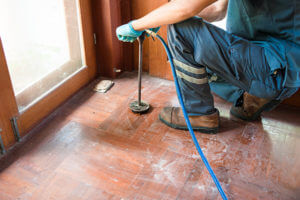
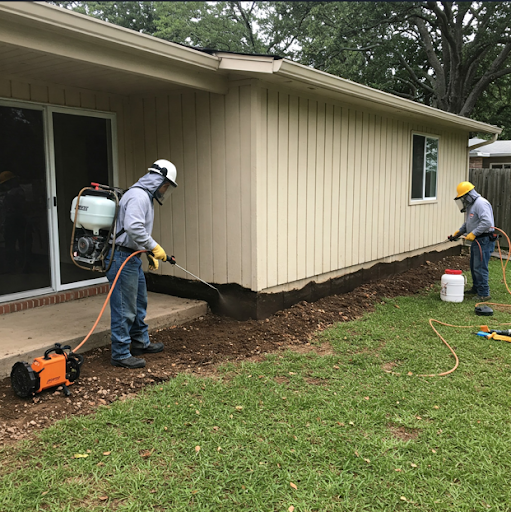
Non-repellent termiticides are applied around and sometimes under the home, usually via a trench-and-treat (trench-and-drench) method in the soil. Termites pass through treated zones without detecting them, pick up the active ingredient and carry it back to the nest. With the right product and maintenance, these systems can protect a home for years.
Physical barriers
Stainless steel mesh, specialised sheeting or graded stone installed at slab stage. These don’t kill termites but force them away from concealed entry paths and into areas where they can be seen during inspections.
Integrated systems
A combination of physical barriers at construction and chemical barriers around the perimeter later on. This layered approach is what many experts prefer for homes in very high-risk areas like the NSW North Coast.
The key point? Professionals choose systems that are designed around termite behaviour — not just whatever’s on the shelf at the local hardware.
What Happens If You Ignore Expert Advice?
Inspectors can rattle off stories like this one all day.
A Lismore homeowner renovated a timber cottage. The original builder hadn’t installed a compliant barrier system. The new owner assumed a couple of DIY sprays and a few bait stations in the garden would be enough.
Two years later, a pre-sale inspection found termites in the walls, subfloor and ceiling joists. The damage estimate was over $40,000. The sale fell through, and the owner was left with a major repair bill and a home that now had a termite history.
All of it could have been prevented with a properly designed barrier and regular inspections from day one.
How Can You Apply Builder and Inspector Thinking to Your Own Home?
You don’t need to be a builder or inspector to make good decisions. You just need to follow the same principles they work by.
If you’re building new:
- Confirm your builder is installing a compliant termite management system under AS 3660.
- Ask what combination of physical barrier and chemical protection they recommend for your specific site.
- Keep copies of all documentation — you’ll need them for future inspections and potential buyers.
If you’re buying an existing home:
- Always get a pre-purchase pest inspection from a qualified professional.
- Ask if a barrier exists, what type, when it was installed and whether it’s still within its effective life.
- Make barrier upgrades part of your negotiation or post-purchase plan if protection is missing or unknown.
If you already own a home:
- Book a termite inspection if you haven’t had one in the last 12 months (or sooner if you’re in a particularly high-risk spot).
- Install or refresh your barrier if inspection results show protection is missing, expired or compromised.
- Maintain the basics: fix leaks quickly, keep gardens and mulch away from walls, and make sure weep holes and inspection zones stay clear.
If you’re unsure where your home stands, a chat with Hugh at Detecta Pest is a simple way to get clarity and a plan.
Why Should You Trust What the Experts Recommend?
Builders and inspectors don’t base their recommendations on theory. They base them on thousands of real homes they’ve seen over decades — some well protected, some badly damaged, some saved just in time.
From their perspective:
- Sprays, baits and spot treatments all have their place.
- But none of them replace a properly designed termite barrier system backed up by regular inspections.
Whether your home is brand new or decades old, a barrier is the one investment that consistently saves owners from big, unexpected repair bills.
Where Can You Get Professional Barrier Installation on the North Coast?
At Detecta Pest, we work with builders, property managers, inspectors and homeowners across the NSW North Coast to put that expert thinking into practice.
We:
- Design and install industry-compliant termite management systems.
- Combine chemical and physical barriers where appropriate for maximum protection.
- Provide ongoing inspections and maintenance so your barrier keeps doing its job.
- Are fully licensed and insured, with local experience in Grafton, Maclean, Coffs Harbour, Lismore and surrounding areas.
If you’d like a builder-level approach to protecting your own home, you can contact Hugh at Detecta Pest to talk through your options and next steps.
What Should You Read Next in This Series?
To see why spray-only “protection” doesn’t match what builders and inspectors rely on, read Blog 4 – “Think Your Termite Spray Is Enough? Here’s Why You Still Need a Barrier” and discover why quick fixes leave homes exposed.
From there, move forward to Blog 6 – “Why Are Termite Barriers No Longer Optional in Coffs Harbour, Grafton, Maclean & Lismore?” to understand how changing conditions and constant termite pressure have turned barriers from an extra into a must-have for local properties.