12 Things Around Your Home That Attract Rats Without You Knowing
A lot of homeowners assume rats only turn up when a property’s dirty or neglected. In reality, even a well-kept home can attract rodents if it’s giving them easy access to food, water or shelter.
Across Grafton, the Clarence Valley and surrounding parts of NSW, rats are highly adaptable. They’ll take advantage of everyday features most people never think twice about — a pet water bowl, a compost bin, an overgrown garden bed, poorly stored firewood.
The good news is most of these are easy to manage once you know what to look for. Sort them out early and you cut the chances of rats making your property part of their nightly rounds.
Why Are Rats Attracted to Residential Properties?
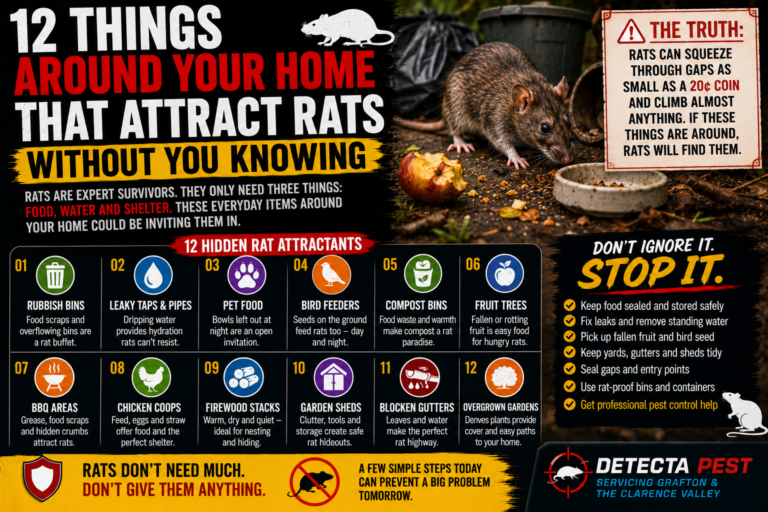
Before getting into the specifics, it helps to understand what a rat’s actually after. Like any animal, they need three things: food, water and shelter. If a home keeps offering all three, rodents are far more likely to visit, and eventually settle nearby.
Here are some of the most common attractants homeowners overlook.
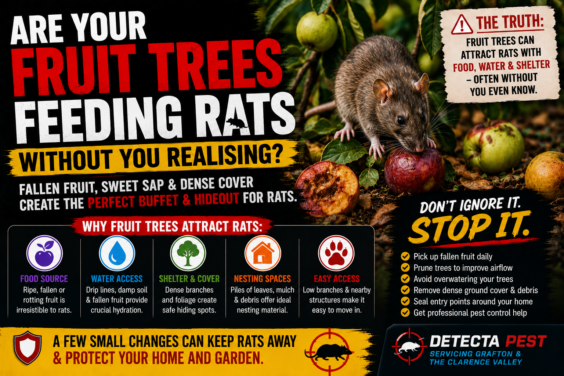
1. Fallen Fruit
Fruit trees are a great addition to any backyard, but fruit left on the ground overnight is one of the easiest meals a rat can find. As it ripens and starts to break down, it gives off strong odours rats can pick up from a fair distance. Collect fallen fruit daily, especially during peak fruiting season. If you’ve got citrus, mango, figs or other fruit trees, Are Your Fruit Trees Feeding Rats Without You Realising? is worth a read.
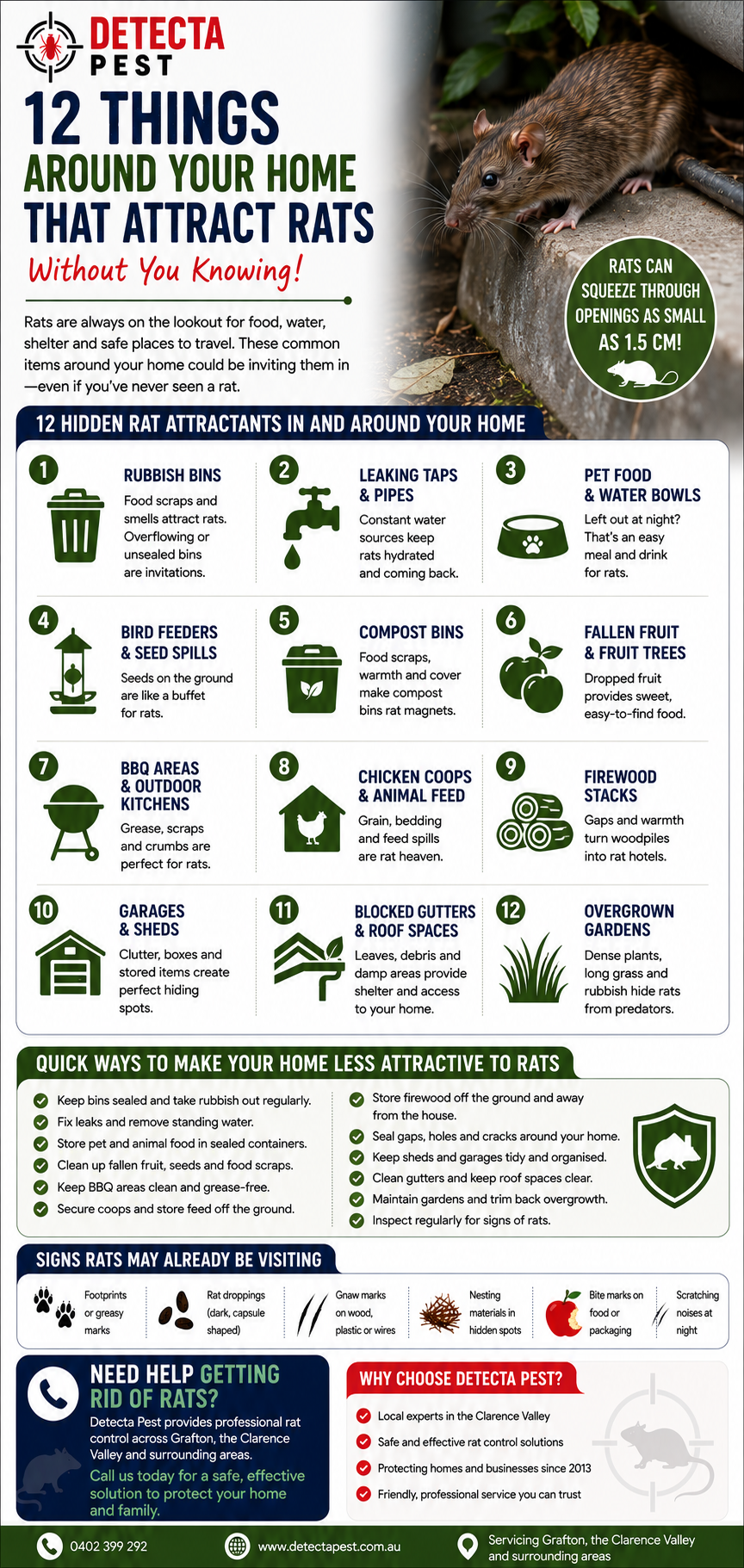
2. Bird Feeders
Bird feeders bring in native wildlife, but they attract rats too. Usually it’s not the feeder itself causing the problem — it’s the seed scattered underneath. Clean up spilled seed daily and avoid overfilling. Why Rats Love Bird Feeders (Even If You’ve Never Seen One) covers this in more detail.
3. Dog Food and Water Bowls
Leaving food and water out overnight gives rats easy access to two of their most important needs at once. Leftover kibble, food scraps, even clean drinking water, are all enough to bring on regular visits. Bring bowls inside overnight where you can and keep the feeding area clean. Is Your Dog’s Water Bowl Attracting Rats At Night? explains some simple ways to discourage this.
4. Swimming Pools
A lot of people are surprised that a pool can attract rats. They’re not fussed about chlorine — they’ll drink from a pool, pool cover, overflow area or nearby puddle if nothing cleaner’s around. Why Rats Keep Drinking From Your Swimming Pool (And How To Stop Them) has practical advice if this sounds familiar.
5. Compost Bins
A compost bin is great for cutting household waste, but it can become a food source if it’s holding the wrong things. Avoid composting meat, dairy, cooking oils or leftover cooked food. Keep it well maintained, in a bin with a proper lid. Compost Bins: A Hidden Rat Magnet in Australian Backyards explains how to compost successfully without inviting rodents in.
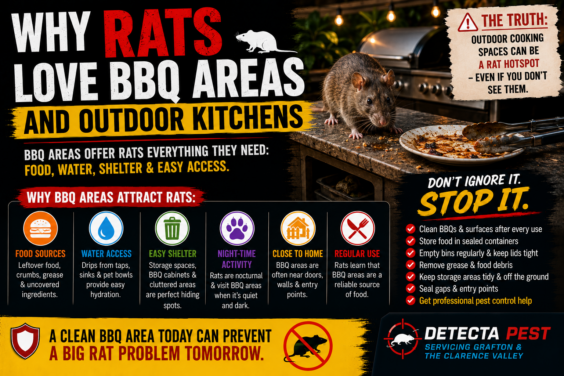
6. BBQ Areas and Outdoor Kitchens
Outdoor entertaining areas often carry tiny food scraps and grease residue that go unnoticed. Rats have a sharp sense of smell and pick up on even small amounts. Clean the cooking surfaces, empty the grease trays, wipe the benches and pick up dropped food after every use. Why Rats Love BBQ Areas and Outdoor Kitchens has more on this.
7. Chicken Coops
Backyard chickens don’t attract rats on their own — it’s the feed, water and bedding that draw rodents in. Store feed securely, clean up spilled grain, and keep the coop well maintained. Can Chicken Coops Attract Rats? is worth reading if you keep poultry.
8. Firewood Stacks
A neatly stacked woodpile creates warm, sheltered gaps where rats can hide during the day. Store firewood off the ground, keep it away from the house, rotate the stack regularly, and clear weeds from around it. How Firewood Stacks Become Rat Hotels explains why correct storage matters so much here.
9. Overflowing Rubbish Bins
Household rubbish is another common drawcard. Food scraps, packaging and residue inside a bin give off strong smells rats pick up quickly. Use bins with a secure lid, clean them regularly, and don’t let them overflow. Keeping rubbish contained removes one of the easiest food sources around the home.
10. Dense Vegetation and Garden Clutter
Rats don’t like crossing open ground. They’d rather travel beneath cover — thick hedges, overgrown shrubs, long grass, a timber pile, stored building materials, general garden clutter. Regular pruning and tidying cuts down these sheltered pathways.
11. Leaking Taps and Standing Water
Even once the obvious food sources are gone, rats still need water. Homeowners often overlook a leaking garden tap, an irrigation leak, a bird bath, a decorative pond, air conditioner drainage, or a bucket collecting rainwater. Fix the leaks and clear the standing water, and the property becomes a lot less appealing.
12. Gaps That Allow Rats Inside
Sometimes the attraction isn’t even in the backyard. Rats get into homes through surprisingly small gaps — around pipes, roof spaces, air conditioning units, garage doors, wall vents, a torn screen. Once inside, they’ve got warmth, shelter and often more food on top of it. Check your home regularly and seal up potential entry points where you can.
Why Rat Problems Are Common in Grafton and the Clarence Valley
Warm Conditions Support Rodent Activity
The relatively mild climate across Grafton and the Clarence Valley keeps rats active for most of the year. Unlike colder parts of the country, where activity drops off over winter, rodents in northern NSW keep searching for food, water and shelter in every season.
Many Homes Border Natural Habitats
Properties near bushland, farms, rivers, parks or open paddocks tend to see more rodent activity, simply from rats moving between natural habitat and the local neighbourhood. Good maintenance matters more in these spots than most people realise.
What Happens When Several Attractants Exist Together?
One attractant on its own might not cause a problem. But a few together create exactly the environment rats are looking for. A situation we frequently encounter is a property with a fruit tree dropping fruit, seed under a bird feeder, a pet bowl left outside, firewood stacked against the garage, and a compost bin that’s not quite sealed properly. On their own, none of these seem like much. Together, they give a rat everything it needs to survive.
If you’ve already dealt with a few of these but rats are still turning up, Why Do Rats Keep Coming Back to the Same House? explains why recurring infestations happen and how to actually break the cycle.
When Should You Contact a Professional Rat Control Service?
Better property maintenance usually helps, but it’s worth calling in a professional if you’re noticing rats regularly around the property, fresh droppings appearing often, scratching in the ceiling or walls, chewed wiring or insulation, rodents getting into sheds, garages or roof spaces, or activity that continues even after removing the obvious attractants.
A professional inspection can identify hidden nesting sites, entry points, and whatever’s still letting rodents thrive on the property.
Rat Prevention Checklist
- Pick up fallen fruit every day
- Sweep up bird seed regularly
- Bring pet food and water bowls inside overnight where practical
- Clean BBQs after every use
- Maintain compost bins correctly
- Store chicken feed securely
- Keep firewood off the ground and away from buildings
- Secure rubbish bin lids
- Repair leaking taps and remove standing water
- Trim dense vegetation
- Remove unnecessary outdoor clutter
- Seal gaps around your home
- Inspect your property regularly for signs of rodent activity
Small, consistent changes like these make a real difference to how attractive your property is to rats.
Trusted Sources for Further Information
- NSW Health – information on rodents, hygiene and disease prevention
- CSIRO – research into rodent behaviour and integrated pest management
- NSW Department of Primary Industries – advice on rodent management and prevention
- Clarence Valley Council – information on waste management and responsible household practices relevant to local residents
Need Professional Rat Control in Grafton or the Clarence Valley?
Most rat problems don’t start overnight. They build up because rodents keep finding easy access to food, water and shelter around a property. Identify and remove these attractants early, and the risk of a full infestation drops right down.
If rats keep coming back despite your best efforts, Detecta Pest can help. We provide professional Rat Control and Pest Control services throughout Grafton, the Clarence Valley and surrounding NSW. Our experienced technicians can inspect your property, locate entry points, work out what’s attracting the rodents, and recommend practical, long-term solutions.
If you’ve noticed signs of rats around your home, get in touch with Detecta Pest for expert advice and reliable rodent control tailored to your property.