Can Chicken Coops Attract Rats?
Keeping backyard chickens has become pretty popular right across Australia. Fresh eggs, a bit of natural pest control, and the enjoyment of raising your own flock make chickens a great addition to a lot of homes. Throughout Grafton, the Clarence Valley and surrounding parts of NSW, it’s common to see a small backyard flock, whether it’s a suburban block or a larger rural property.
One question we get asked a lot is whether the coop itself could be attracting rats.
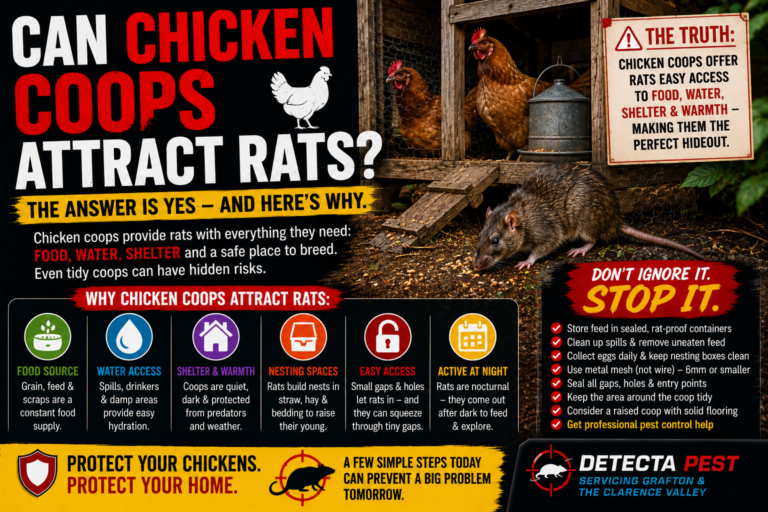
Short answer — yes, but not because of the chickens. Rats aren’t interested in chickens as food. What draws them in is everything that comes along with a coop: feed, water, shelter, and nesting material. The good news is that with decent coop management, you can cut the risk right down.
Why Do Rats Visit Chicken Coops?
Chicken Feed Is an Easy Food Source
The biggest attraction is usually the feed itself. Rats will happily eat layer pellets, mixed grain, cracked corn, scratch mix or loose seed. Even a small amount spilled on the ground each day is enough to keep rodent activity going. Once they find an easy feed like that, they’ll keep coming back most nights.
Feed Is Often Available Around the Clock
A lot of chicken owners leave the feeder full overnight so the flock has something to eat first thing. Trouble is, that also gives rats free access after dark, once the chickens have gone to roost. Removing feeders overnight, where it’s practical, can make a real difference.
Water Is Just as Important
Rats need water daily, same as anything else. Most coops have a drinking container, an automatic waterer, a bucket, or even just puddles left over from cleaning — any of it’s enough to keep rats supplied. If you’ve also got pet bowls outside or a pool on the property, rats may have several places to drink from. Is Your Dog’s Water Bowl Attracting Rats At Night? and Why Rats Keep Drinking From Your Swimming Pool (And How To Stop Them) are both worth a look if you want to cut down water sources elsewhere in the yard.
Do Rats Harm Chickens?
Adult Chickens Usually Defend Themselves
Healthy adult hens are generally too big for a rat to take on. That said, rats can still cause problems in the coop. They’ll steal feed, contaminate food and water, damage nesting material, chew through timber or plastic fittings, and generally stress the flock with regular night-time activity. Adult hens aren’t usually under direct threat, but ongoing rodent activity does affect the cleanliness and overall health of the coop.
Chicks and Eggs Can Be Vulnerable
Young chicks and eggs are a different story. A larger rat may eat eggs, injure newly hatched chicks, or disturb a nesting hen. Protecting the nesting area is a genuinely important part of keeping chickens.

Why Chicken Coops Make Good Shelter for Rats
Warm, Dry Conditions
A coop offers rats excellent protection from the weather. They’re always on the lookout for somewhere dry, warm, quiet and close to food — and a coop usually ticks all four boxes.
Bedding Materials Create Nesting Opportunities
Hay, straw and wood shavings all make comfortable nesting material for rats. If bedding sits unchanged for too long, or builds up underneath the coop, rodents may end up nesting right there.
Clutter Around the Coop
A lot of chicken owners store supplies close to the enclosure — feed bags, buckets, timber, old gear, garden tools. All of it gives rats extra places to hide during the day.
How Can You Tell If Rats Are Visiting Your Chicken Coop?
Feed Disappears Quickly
If your chickens aren’t eating noticeably more but the feed’s going down fast, rodents are probably helping themselves overnight.
Droppings Around the Coop
Rat droppings usually turn up near feeders, around water containers, along walls, or behind stored equipment. Finding fresh droppings regularly is a good sign of ongoing activity.
Burrows Under the Coop
Rats often dig burrows beneath coops, sheds, concrete slabs, or garden edging — anywhere that gives them cover while staying close to food.
Chewed Feed Bags
Rats gnaw constantly to keep their teeth from overgrowing, so feed bags with holes or chew marks are a fairly reliable sign of activity. Heavy-duty sealed containers are always a better option than paper or plastic bags.
Why Chicken Coops Can Attract Rats in Grafton and the Clarence Valley
Rural and Semi-Rural Properties
A lot of properties across Grafton and the Clarence Valley have the sort of larger blocks that suit keeping chickens. Around Grafton and the Clarence Valley, we often see more rodent movement on properties backing onto bushland, farms, rivers or open paddocks, simply because rats travel freely between the bush and the backyard.
Mild Climate Supports Year-Round Activity
The region’s mild climate keeps rats active for most of the year. If food and shelter are on offer, they don’t need to travel far to get by.
How Can You Stop Rats From Being Attracted to Your Chicken Coop?
Clean Up Spilled Feed Every Day
One of the most effective things you can do. After feeding, sweep up loose grain, clear away excess pellets, and don’t let feed build up under the feeders. Less food out means less reason for rats to visit.
Store Feed Correctly
Never leave feed sitting in an open bag. Use a sealed metal or heavy-duty plastic container with a tight lid instead. Proper storage stops both access and the smell that draws rats in.
Remove Feed Overnight Where Practical
If the chickens have finished eating before dusk, consider pulling the feeder in overnight. That cuts off the food supply right when rats become active.
Maintain the Coop
Keep things tidy — replace bedding regularly, clear out old nesting material, keep weeds down around the enclosure, repair any damaged timber, and remove clutter you don’t need. A tidy coop just gives rats a lot less to hide behind.
Don’t Forget Other Backyard Attractions
Compost Bins
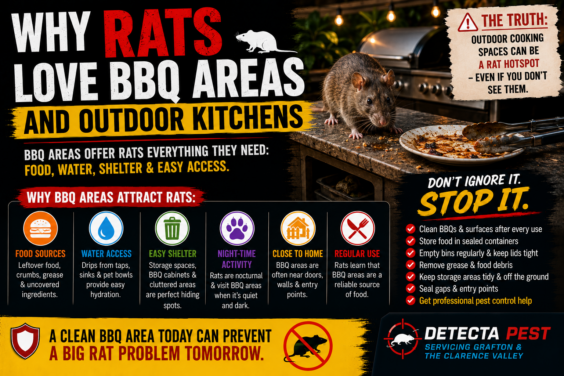
A lot of chicken owners compost manure and food scraps nearby. A poorly managed compost bin adds another food source into the mix. Compost Bins: A Hidden Rat Magnet in Australian Backyards has some practical tips for keeping compost rodent-free.
Fruit Trees
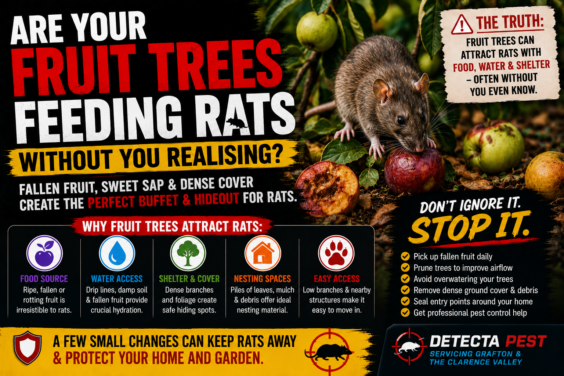
A fruit tree near the coop can add to the problem if fallen fruit isn’t collected regularly. Are Your Fruit Trees Feeding Rats Without You Realising? explains why regular collection matters.
Bird Feeders
If you’re feeding wild birds too, spilled seed underneath is another easy meal for rats. Why Rats Love Bird Feeders (Even If You’ve Never Seen One) covers how to cut this down.
Why Do Rats Keep Returning?
Rats are creatures of habit. Once they’ve found reliable food and shelter, they’ll keep coming back unless something changes. Even with better coop management, they might still find pet food, BBQ residue, an overflowing bin, a firewood stack, or thick vegetation nearby.
If you’re dealing with persistent activity, Why Do Rats Keep Coming Back to the Same House? explains why some properties keep having the same problem no matter what homeowners try.
When Should You Call a Professional Rat Control Service?
Good coop hygiene cuts down activity, but it’s worth arranging a professional inspection if you’re seeing rats around the coop every night, fresh droppings turning up regularly, burrows forming beneath the coop, damage to feed storage, or rodents getting into sheds, garages or the house itself.
Professional pest control focuses on finding nesting areas, entry points and the underlying cause of the infestation, while keeping risks to your chickens and other animals to a minimum.
Chicken Coop Rat Prevention Checklist
- Sweep up spilled feed every day
- Store chicken feed in sealed containers
- Remove feeders overnight where practical
- Replace bedding regularly
- Repair holes or damage to the coop
- Remove clutter around the enclosure
- Collect fallen fruit nearby
- Maintain compost bins properly
- Repair leaking water containers
- Monitor regularly for signs of rodent activity
Consistent maintenance is one of the best ways to protect the flock and the rest of the property from unwanted rodents.
Trusted Sources for Further Information
- NSW Health – information on rodents, hygiene and disease prevention
- CSIRO – research into rodent behaviour and integrated pest management
- NSW Department of Primary Industries – advice on rodent management, biosecurity and poultry care
Need Professional Rat Control in Grafton or the Clarence Valley?
Keeping chickens doesn’t mean you have to live with rats. Manage the feed properly, cut down on shelter, and keep the coop clean, and you’ll significantly reduce the chances of rodents becoming regular visitors.
Detecta Pest provides professional Rat Control and Pest Control services throughout Grafton, the Clarence Valley and surrounding NSW. Our experienced team can inspect your property, work out why rats are returning, and provide practical, long-term solutions that protect your home, backyard, and livestock.
If you’ve noticed rats around your chicken coop or anywhere else on the property, get in touch with Detecta Pest for expert advice and reliable rodent control.