

Why Do So Many Mouse Problems Start In Sheds?
For many Clarence Valley property owners, the first signs of mice don’t usually appear inside the home itself.
Instead, activity often begins around sheds, garages, machinery storage areas, feed rooms, or outdoor storage spaces where mice can stay hidden without attracting much attention.
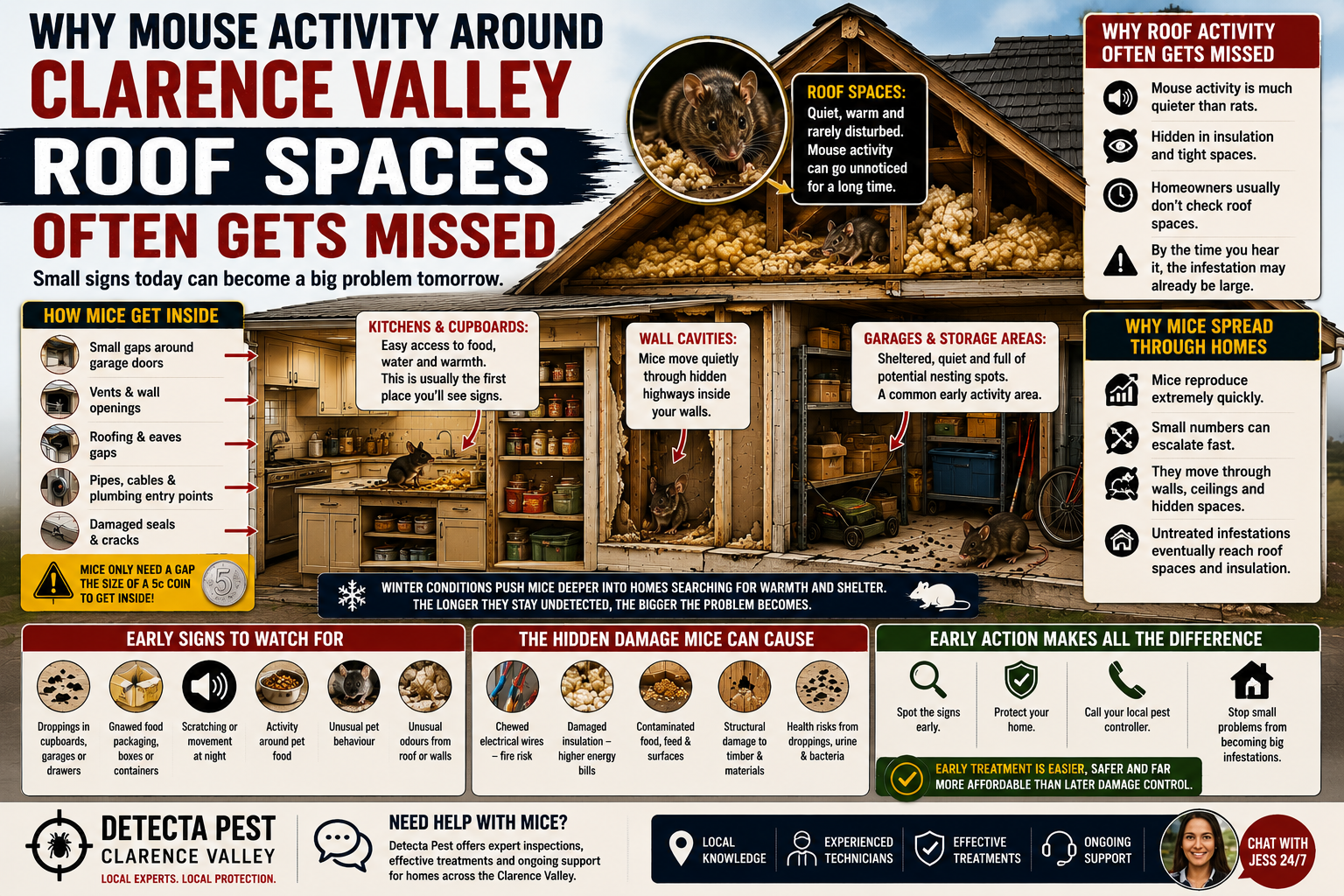
At first, it might only be a few droppings near stored materials or scratching sounds late at night. But once winter conditions settle in, those smaller signs can quickly turn into much heavier mouse activity around the property.
And because sheds naturally provide warmth, shelter, nesting areas, and protection from predators, they often become the perfect environment for mice once temperatures begin dropping across the Clarence Valley.
Key Takeaways
- Sheds often become one of the first areas mice establish themselves during winter
- Stored materials, clutter, and shelter attract mice quickly
- Mouse activity around sheds can spread toward nearby homes and garages
- Rural and semi-rural properties are especially vulnerable
- Winter conditions push mice toward warmer sheltered spaces
- Early treatment is usually easier than dealing with widespread infestations later
Table of Contents
- Why sheds attract mice during winter
- Why mouse activity often starts quietly
- What materials inside sheds attract mice
- Why rural properties see heavier shed activity
- How shed infestations spread around properties
- Why winter makes shed infestations worse
- What homeowners should watch for
Why Are Sheds So Attractive To Mice During Winter?
As temperatures begin dropping across the Clarence Valley, outdoor nesting conditions become less reliable for mice.
Sheds suddenly become extremely attractive because they provide:
- warmth
- shelter
- darkness
- nesting materials
- protection from predators
- reduced human activity
For mice searching for safe winter shelter, sheds can offer almost ideal conditions once populations begin building nearby.
Why Do Mice Prefer Quiet Storage Areas?
Unlike busy parts of the home, sheds and outdoor storage spaces often remain undisturbed for long periods.
Stored boxes, cardboard, fabrics, feed bags, old furniture, machinery covers, and cluttered shelving all create protected nesting areas where mice can remain hidden surprisingly easily.
That’s one reason many shed infestations continue growing quietly long before property owners realise how active the problem has become.
Why Does Mouse Activity Around Sheds Often Start Quietly?
One of the biggest challenges with mice is how easily they avoid detection early on.
Most activity happens overnight, particularly around quieter outdoor structures where there’s very little daytime disturbance.
What Are The Early Signs Of Mice Inside Sheds?
Many Clarence Valley property owners first notice:
- droppings around shelving
- gnawed feed bags
- scratching sounds at night
- nesting materials in corners
- damaged cardboard boxes
- movement near stored equipment
In many cases, by the time these signs become obvious, mice may already have been breeding around the shed for weeks.
We explore how infestations spread so quickly further in our article:
“Why Mouse Problems Can Spread So Quickly Across Clarence Valley Homes.”
Why Are Rural Clarence Valley Properties More Vulnerable?
Properties near farmland, paddocks, waterways, or bushland naturally experience heavier mouse pressure because mice are already living nearby outdoors.
Once winter conditions begin cooling, sheds become one of the first sheltered areas mice move into.
Why Are Farm Sheds Especially Attractive To Mice?
Farm sheds often contain:
- feed storage
- hay
- machinery
- grain
- water access
- nesting materials
That combination can allow mouse populations to increase surprisingly quickly once breeding conditions become favourable.
It’s one reason many rural property owners across the Clarence Valley are already reporting increased mouse activity unusually early this winter.
Why Do Shed Infestations Often Spread Toward Homes?
Once mice establish themselves inside sheds or garages, they rarely stay confined to one area.
As populations increase, mice naturally begin searching for additional food and shelter around nearby buildings.
Can Shed Infestations Spread Into Houses?
Yes.
Infestations that begin around sheds often spread toward:
- garages
- roof spaces
- kitchens
- storage rooms
- wall cavities
- nearby homes
This becomes especially common around semi-rural properties where sheds sit close to the main house.
We explore why mice are moving indoors earlier this year further in our article:
“Why Mice Are Moving Into Clarence Valley Homes Earlier This Year.”
Why Does Winter Make Shed Infestations Worse?
Winter changes mouse behaviour significantly.
As outdoor temperatures continue dropping, mice concentrate more heavily around warm sheltered environments where food and nesting areas remain reliable.
Why Can Mouse Populations Increase So Quickly Around Sheds?
Mice reproduce extremely quickly once conditions suit them.
If food access, shelter, and nesting areas remain available inside sheds throughout winter, populations can build surprisingly fast without attracting much attention initially.
That’s one reason local pest controllers often see shed infestations become much heavier later in winter if the problem isn’t addressed early.
What Damage Can Mice Cause Inside Sheds?
For many property owners, shed infestations initially seem more annoying than serious.
But over time, mice can damage:
- stored equipment
- feed bags
- cardboard storage
- insulation
- electrical wiring
- machinery components
Droppings and urine can also create hygiene issues around stored materials, feed, and workspaces once infestations become established.
Why Are Recurring Shed Infestations So Common?
Without identifying how mice are entering the shed — and what’s attracting them to remain there — infestations often continue returning throughout winter.
Busy mouse seasons can also make activity harder to control because surrounding outdoor populations remain active nearby.
What Should Clarence Valley Property Owners Watch For?
The earlier mouse activity is identified around sheds and garages, the easier it’s usually to control before populations spread further throughout the property.
Homeowners and rural property owners should watch for:
- droppings
- gnawed materials
- scratching sounds
- nesting materials
- recurring sightings
- damaged feed or storage boxes
Why Is Early Action Important?
Because mice reproduce so quickly, relatively small infestations can become much larger problems surprisingly fast once winter conditions settle in properly.
For many Clarence Valley property owners, dealing with mouse activity early around sheds is often far easier than trying to control widespread infestations later in the season.
Need Help With Mouse Problems Around Your Clarence Valley Property?
If you’re already noticing signs of mice around your home, shed, garage, or storage areas, acting early is usually the best way to prevent a much larger infestation developing later in winter.
If you are experiencing mouse problems in the Clarence Valley, contact Hugh from Detecta Pest for professional advice and inspections.
You can also speak with our AI team member Jess 24/7 through the Detecta Pest website or Facebook page. Jess can answer questions, help identify common signs of mouse activity, and even book you in for an inspection anytime.
If you’d prefer, you can also use the enquiry form on the Detecta Pest website to send through an enquiry whenever it suits you.
Frequently Asked Questions
Why do mice commonly infest sheds during winter?
Sheds provide warmth, shelter, nesting materials, and protection once outdoor temperatures begin dropping.
Why are rural sheds more vulnerable to mice?
Properties near farmland, paddocks, waterways, and bushland naturally experience heavier mouse activity nearby.
What attracts mice into sheds?
Stored materials, feed, clutter, cardboard boxes, warmth, and quiet nesting spaces all attract mice.
Can shed infestations spread into homes?
Yes. Mice often move from sheds and garages into nearby homes searching for additional food and shelter.
What are the first signs of mice inside sheds?
Common signs include droppings, gnawed materials, scratching noises, nesting materials, and recurring sightings.
Can mice damage equipment inside sheds?
Yes. Mice can damage stored materials, feed bags, wiring, insulation, and machinery components.
Why do mouse infestations around sheds get worse during winter?
Cooler weather pushes mice toward warmer sheltered environments where food and nesting areas remain reliable.
When should I contact a pest controller about mice in sheds?
It’s best to arrange an inspection as soon as recurring signs of mouse activity begin appearing around sheds or garages.