

Why Are More Farmers Around the Clarence Valley Talking About Mice This Winter?
Across parts of the Clarence Valley, increasing mouse activity is becoming a growing concern for many rural property owners heading into winter.
For some farmers, it starts with small signs around sheds, feed storage areas, or machinery buildings. Others are noticing increased movement around hay storage, grain, animal feed, and paddocks as temperatures begin dropping across the region.
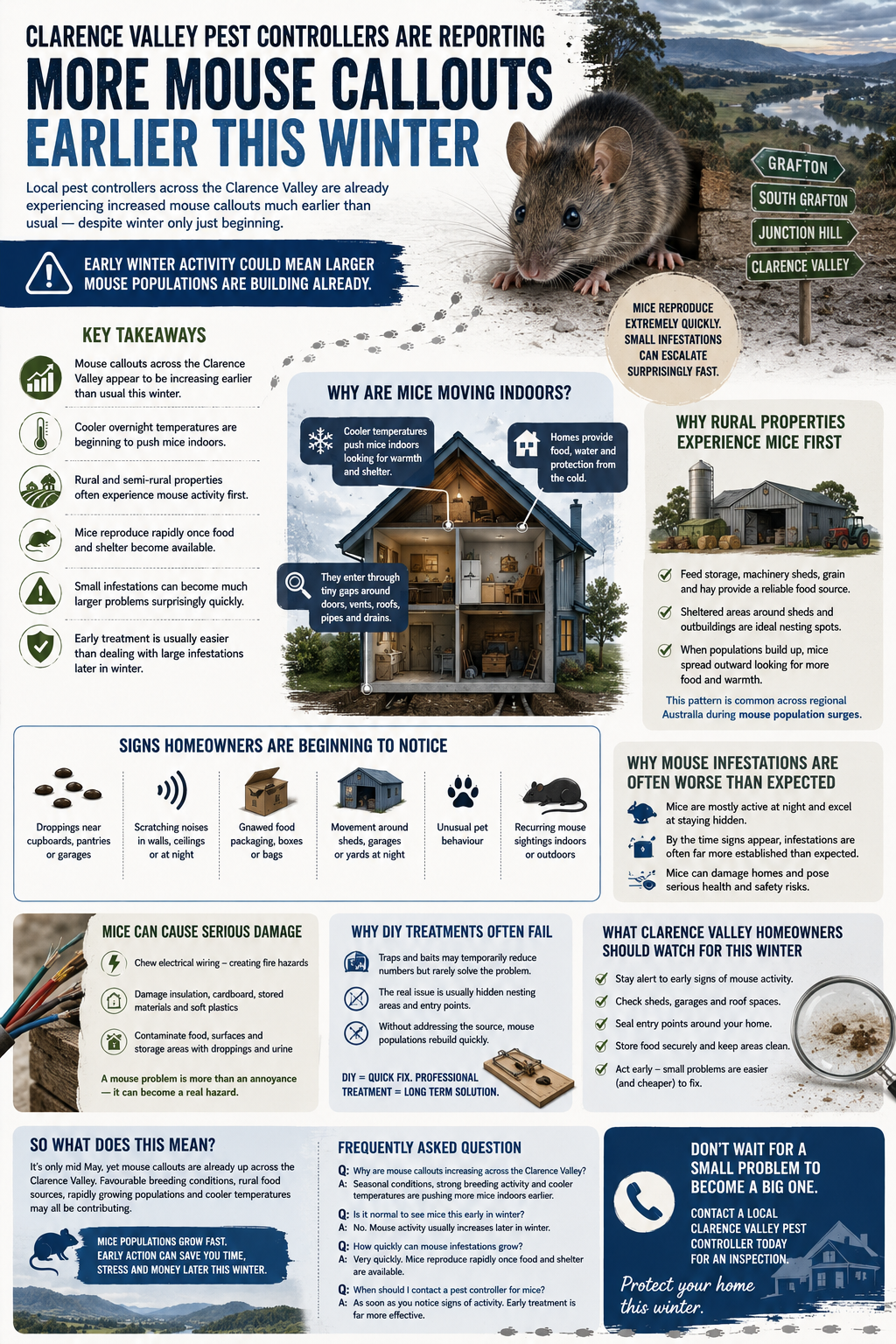
While mice have always been part of life around rural Australia, many local property owners say activity this year already feels heavier than usual — especially considering it’s still only the early stages of winter.
And because mice reproduce extremely quickly once conditions suit them, even relatively small increases in population numbers can escalate surprisingly fast around farming properties.
Key Takeaways
- Farmers across the Clarence Valley are beginning to report increased mouse activity heading into winter
- Rural properties naturally provide ideal conditions for mice once populations begin building
- Feed storage, sheds, grain, and hay areas commonly attract mice
- Cooler temperatures are now pushing mice closer to sheltered areas and buildings
- Mouse populations can increase rapidly once food and nesting areas become available
- Early action is usually easier than dealing with larger infestations later in winter
Table of Contents
- Why rural properties often experience mice first
- Why farming conditions attract mice
- Why mouse populations can escalate quickly
- What farmers are noticing around properties
- Why winter often increases mouse activity
- Could broader regional conditions be contributing?
- What rural property owners should watch for
Why Do Rural Properties Often Experience Mouse Activity First?
The Clarence Valley’s mix of farmland, machinery sheds, paddocks, waterways, feed storage, and semi-rural housing naturally creates conditions where mice can thrive once populations begin increasing.
Unlike suburban environments, farming properties often provide:
- reliable food sources
- large sheltered areas
- nesting materials
- reduced disturbance
- easy access between paddocks and buildings
For mice, these conditions can make rural properties ideal environments for breeding and expansion.
Why Are Sheds and Feed Storage Areas So Attractive To Mice?
Feed storage areas, hay sheds, grain storage, and machinery buildings often provide warmth, shelter, and easy food access once temperatures begin cooling.
Even relatively small mouse populations around paddocks or surrounding bushland can move into these areas surprisingly quickly once winter conditions begin changing.
That’s one reason rural property owners often notice increased mouse activity earlier than surrounding suburban areas.
Why Can Mouse Numbers Increase So Quickly Around Farms?
One of the biggest challenges with mice is how fast populations can grow once breeding conditions become favourable.
A relatively small number of mice living around sheds, paddocks, storage areas, or nearby vegetation can multiply rapidly over a short period of time if food and shelter remain available.
Why Do Mouse Problems Suddenly Feel Much Worse?
Many farmers initially notice only subtle warning signs like droppings, feed contamination, movement around sheds at night, or damage to stored materials.
But because mice reproduce so quickly, populations can escalate quietly in the background long before activity becomes highly visible.
That’s one reason mouse problems across farming areas can suddenly seem to “explode” almost overnight once populations become properly established.
We explore this further in our article:
“Why Mouse Problems Can Spread So Quickly Across Clarence Valley Homes.”
What Are Farmers Around the Clarence Valley Beginning To Notice?
Many rural property owners are reporting increased signs of mouse activity around:
- feed sheds
- machinery storage areas
- hay storage
- garages
- storage containers
- animal feed areas
Some property owners are also noticing increased activity at night around outdoor structures and sheltered areas close to homes.
Why Are Mice Moving Closer To Buildings?
As overnight temperatures continue dropping across the Clarence Valley, mice naturally begin searching for warmer and more protected environments.
Sheds, garages, machinery buildings, storage rooms, and nearby homes provide ideal shelter during winter once outdoor nesting conditions become colder and less reliable.
That movement often brings mice much closer to homes and work areas around rural properties.
Could Broader Mouse Activity Across Australia Be Contributing?
Across parts of regional Australia, agricultural experts and organisations like the CSIRO have already been monitoring increased mouse activity throughout 2026.
Recent reports from regional Queensland and other farming regions interstate suggest mouse populations are already building in some agricultural areas heading into winter.
Does That Mean The Clarence Valley Has A Mouse Plague?
Not necessarily.
The Clarence Valley is not currently experiencing the large-scale plague conditions seen in some inland farming regions during previous years. However, broader increases in mouse activity across regional Australia may still help explain why more rural property owners and local pest controllers are already noticing increased activity unusually early this winter.
Conditions across farming regions can change quickly once mouse populations begin building, particularly when food sources and shelter remain easily available.
Why Are Winter Conditions Making Mouse Activity Worse?
Winter often changes mouse behaviour significantly around rural properties.
As temperatures drop, mice begin concentrating around warmer sheltered areas where food and nesting conditions are more reliable.
Why Do Mice Move Indoors During Winter?
Garages, sheds, feed storage areas, machinery buildings, and nearby homes provide:
- warmth
- shelter
- food access
- nesting areas
- protection from predators
Once mice establish themselves indoors or around sheltered structures, populations can continue growing surprisingly quickly throughout winter.
That’s one reason many rural property owners start noticing heavier mouse activity once colder weather settles in properly.
We explore the broader winter conditions contributing to increased local activity further in our article:
“It’s Only Mid May — So Why Are Mouse Numbers Already Rising Across the Clarence Valley?”
Why Are Farmers Taking Mouse Activity Seriously This Year?
For many rural property owners, the biggest concern is how quickly relatively small mouse problems can become much larger infestations.
Once mice establish themselves around feed storage, sheds, machinery buildings, or nearby homes, populations can spread rapidly throughout the property if left untreated.
Can Mice Damage Farming Properties?
Mice can contaminate feed, damage stored materials, chew wiring, and create hygiene issues around sheds, storage areas, and buildings once populations become established.
For many farmers, early action is often far easier than trying to control much larger populations later in winter.
What Should Rural Property Owners Watch For?
Early signs of increased mouse activity often include:
- droppings around feed storage
- gnawed packaging
- movement around sheds at night
- unusual animal behaviour
- scratching noises inside buildings
- signs of nesting materials
Why Is Early Action Important?
Because mice reproduce so quickly, even relatively small infestations can escalate rapidly if conditions remain favourable throughout winter.
As temperatures continue dropping across the Clarence Valley, many rural property owners are likely to keep seeing increased mouse activity around farming properties over the coming months.
Addressing mouse activity early is usually far easier than dealing with larger infestations once populations become properly established around sheds, storage areas, and nearby homes.
Frequently Asked Questions
Why are farmers across the Clarence Valley seeing more mice?
Several factors may be contributing, including favourable breeding conditions earlier in the year, rural food sources, and cooler weather pushing mice toward sheltered areas.
Are rural properties more vulnerable to mice?
Yes. Farming properties naturally provide food, shelter, nesting areas, and storage spaces that attract mice.
Why do mice gather around sheds and feed storage?
These areas provide warmth, shelter, food access, and protection during colder winter conditions.
Can mouse populations increase quickly around farms?
Very quickly. Mice reproduce rapidly once food and shelter become available.
Are current mouse problems linked to regional Australian mouse plague conditions?
While the Clarence Valley is not currently experiencing large-scale plague conditions, broader increases in mouse activity across regional Australia may still be contributing to rising local populations.
What damage can mice cause around farming properties?
Mice can contaminate feed, damage wiring, chew stored materials, and create hygiene problems once infestations become established.
What are the early signs of mouse activity around farms?
Common signs include droppings, gnawed packaging, scratching noises, movement around sheds, and nesting materials.
When should farmers contact a pest controller for mice?
It’s best to arrange an inspection as soon as recurring signs of mouse activity begin appearing around sheds, storage areas, or nearby buildings.