

Why Are More Clarence Valley Residents Calling About Mice Already?
Usually, mouse activity around the Clarence Valley starts becoming more noticeable later in winter. It’s often June or July when homeowners around Grafton and surrounding areas begin finding droppings in cupboards, hearing scratching at night, or noticing more activity around sheds and garages as colder temperatures settle in properly.
But this year appears to be different.
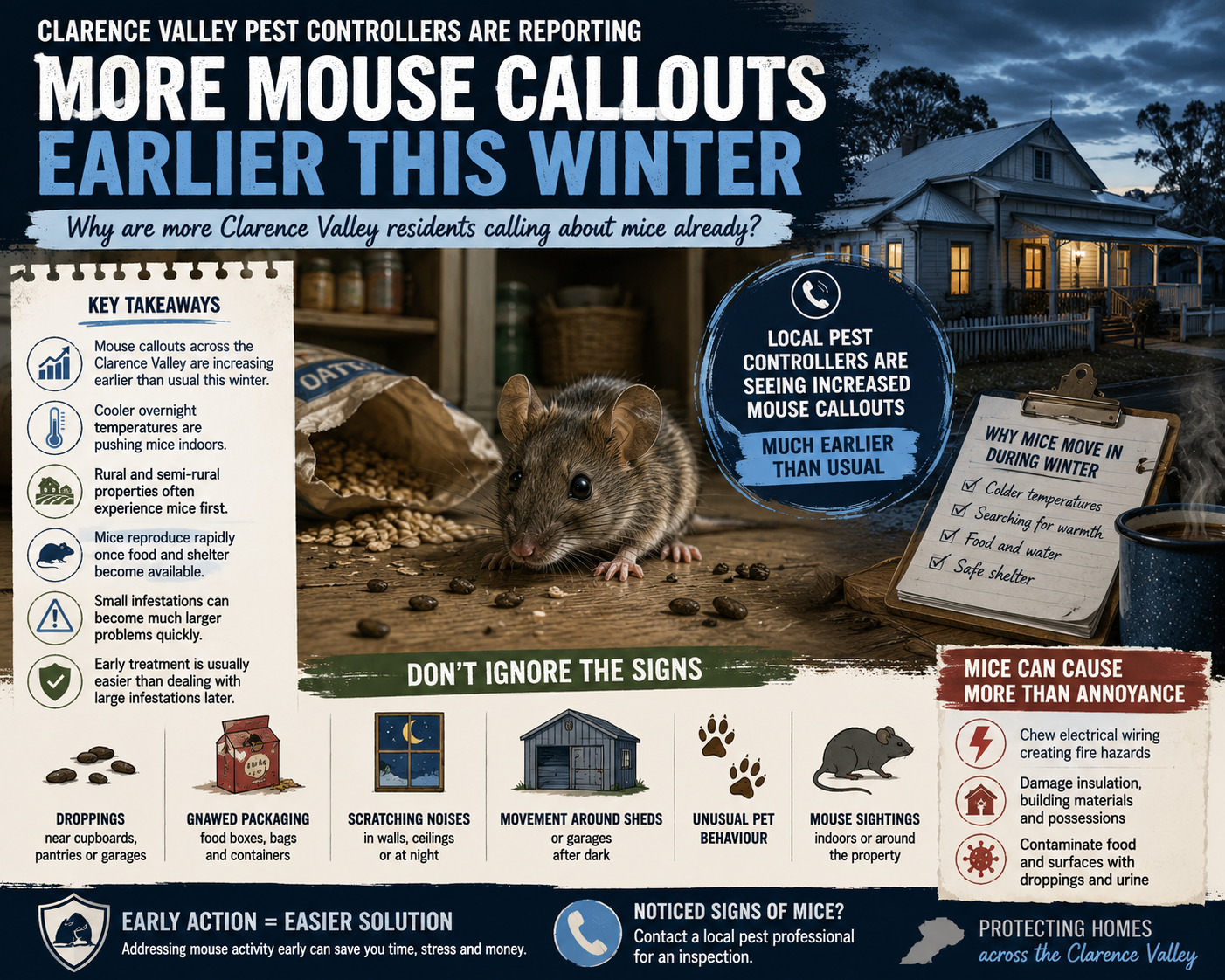
Despite winter only just beginning, local pest controllers across the Clarence Valley are already reporting increased mouse callouts much earlier than many would normally expect for mid May. From semi-rural homes outside Grafton to properties around South Grafton, Junction Hill, and nearby areas, more residents are starting to notice signs of mice around the home earlier in the season.
Part of the concern is that early winter activity often points to larger mouse populations already building quietly in the background before colder weather properly arrives.
And because mice reproduce extremely quickly once conditions suit them, small infestations can escalate surprisingly fast once temperatures continue dropping.
Key Takeaways
- Mouse callouts across the Clarence Valley appear to be increasing earlier than usual this winter
- Cooler overnight temperatures are beginning to push mice indoors
- Rural and semi-rural properties often experience mouse activity first
- Mice reproduce rapidly once food and shelter become available
- Small mouse infestations can become much larger problems surprisingly quickly
- Early treatment is usually easier than dealing with large infestations later in winter
Table of Contents
- Why mouse callouts could be increasing earlier this year
- Why mice spread quickly once populations become established
- Why mice move indoors during winter
- Why rural properties often experience mice first
- The signs local homeowners are reporting
- Why mouse infestations are often worse than expected
- Why DIY mouse treatments often fail
- What homeowners should watch for this winter
Why Could Mouse Callouts Be Increasing Earlier This Year?
Across regional Australia, agricultural experts and organisations like the CSIRO have previously warned that mouse populations can rise rapidly when environmental conditions favour breeding. Mild weather, reliable food sources, and sheltered nesting areas can all contribute to population growth long before most people notice obvious signs around the home.
While the Clarence Valley is not currently experiencing the large-scale mouse plague conditions seen in some inland farming regions during previous years, local conditions may still be contributing to increased mouse activity this winter.
Could Broader Mouse Activity Across Australia Be Playing a Role?
Recent reports from regional farming areas interstate suggest mouse populations are already increasing in parts of Australia heading into winter 2026. Researchers monitoring conditions in grain-growing regions have warned that favourable breeding conditions can allow mouse populations to escalate very quickly once numbers begin building.
While conditions across the Clarence Valley are very different from the large-scale mouse plague events seen elsewhere in Australia, broader increases in mouse activity may still help explain why local pest controllers are already receiving increased mouse callouts unusually early this winter.
We explore this further in our article:
“Could Australia’s Growing Mouse Plague Be Contributing to Increased Mouse Activity Across the Clarence Valley?”
Why Do Mouse Problems Escalate So Quickly?
One of the biggest misconceptions homeowners have is assuming that seeing one or two mice around the property isn’t a major issue.
Unfortunately, mice reproduce extremely fast once food, warmth, and shelter become available. A relatively small mouse population hiding around sheds, garages, wall cavities, or nearby paddocks can increase rapidly over a surprisingly short period of time.
How Quickly Can Mouse Populations Grow?
By the time homeowners begin noticing obvious signs like droppings, damaged packaging, or movement around the house at night, infestations are often already far more established than expected.
That’s one reason mouse activity can suddenly feel like it has appeared out of nowhere.
Much of this comes down to how quickly mice reproduce once populations become established — something we explain further in our article:
“Why Mouse Problems Can Spread So Quickly Across Clarence Valley Homes.”
Why Are Mice Moving Indoors Earlier This Winter?
As overnight temperatures begin dropping across the Clarence Valley, homes become much more attractive to mice searching for warmth and shelter.
Garages, kitchens, storage rooms, wall cavities, and roof spaces all provide protection from colder outdoor conditions. Once mice gain access to food and water, they often settle in quickly.
How Are Mice Getting Inside Homes?
Even well-maintained homes can become vulnerable during winter if small entry points exist around garage doors, roofing, vents, plumbing penetrations, or damaged seals.
Properties near paddocks, bushland, waterways, or farmland often experience increased mouse activity first, although suburban homes throughout Grafton and surrounding areas are certainly not immune.
Why Do Rural Properties Often Experience Mouse Activity First?
The Clarence Valley’s strong agricultural presence naturally creates conditions where mice can thrive if populations begin increasing.
Farming properties commonly contain feed storage, machinery sheds, hay storage, grain, and sheltered nesting areas that attract mice throughout the year.
Could Rural Conditions Be Supporting Higher Mouse Numbers?
When mouse populations begin increasing across rural areas, mice often spread outward searching for additional shelter and food as winter conditions continue developing.
This pattern has been observed during previous mouse population surges across regional Australia, where farming districts often experience rising activity before surrounding residential areas begin noticing similar problems.
That doesn’t necessarily mean the Clarence Valley is heading toward mouse plague conditions, but it may help explain why local pest controllers are already seeing increased mouse activity earlier than many would normally expect.
What Signs Are Local Homeowners Beginning To Notice?
Most mouse infestations begin quietly.
Many homeowners first notice small warning signs like droppings near food storage areas, unusual pet behaviour, scratching sounds at night, damaged food packaging, or activity around sheds and garages after dark.
Why Are Mouse Problems Often Worse Than They First Appear?
Because mice are mostly active overnight and extremely good at staying hidden, infestations often remain unnoticed for weeks or even months.
In many cases, homeowners don’t realise how extensive a mouse problem has become until mice are already established inside walls, garages, storage areas, or ceilings.
Can Mice Actually Damage Homes?
For many homeowners, mice initially seem more annoying than dangerous.
But over time, mouse infestations can create genuine property and hygiene issues if left untreated.
What Damage Can Mice Cause Around the Home?
Mice regularly chew through insulation, cardboard, food packaging, stored materials, and soft plastics. More concerningly, mice can also damage electrical wiring inside walls and ceilings, which can eventually create electrical hazards if infestations become severe enough.
Mice can also contaminate kitchens, pantries, and storage areas through droppings and urine once populations become established indoors.
Why Do DIY Mouse Treatments Often Fail?
A lot of homeowners understandably begin with supermarket traps or bait products when they first notice mouse activity.
While these can occasionally reduce visible mouse numbers temporarily, they often fail to address the underlying problem.
Why Do Mouse Problems Often Return?
The bigger issue is usually identifying where mice are nesting, how mice are entering the property, and what’s allowing mouse populations to continue rebuilding quietly in the background.
Without addressing the source of the infestation, mouse activity often returns surprisingly quickly.
What Should Clarence Valley Homeowners Watch For This Winter?
With winter only beginning, many local pest professionals expect mouse activity could continue increasing across the Clarence Valley over the coming months.
Homeowners should pay attention to:
- droppings around cupboards or garages
- scratching noises at night
- gnawed packaging
- movement around sheds
- unusual pet behaviour
- recurring mouse sightings indoors
Why Is Early Action So Important?
The earlier mouse activity is identified, the easier it’s usually to manage before mouse populations spread further throughout the home.
Because mice reproduce so quickly, even relatively small infestations can become much harder to control later in winter if left untreated.
So What Does This Mean for Clarence Valley Residents?
It’s still only mid May, but local pest controllers across the Clarence Valley are already seeing increased mouse callouts much earlier than many would normally expect.
Several factors may be contributing, including favourable breeding conditions earlier in the year, rural food sources, rapidly growing mouse populations, and cooler temperatures now pushing mice indoors searching for warmth and shelter.
Could Mouse Activity Continue Increasing Through Winter?
Broader increases in mouse activity being reported across parts of regional Australia may also be playing a role.
What makes mice particularly difficult is how quickly small mouse populations can grow once conditions suit them. By the time obvious signs begin appearing around the home, infestations are often far more established than most people realise.
As winter continues across the Clarence Valley, homeowners noticing early signs of mouse activity are usually far better off addressing the problem early before infestations become much harder to manage later in the season.
Frequently Asked Questions
Why are mouse callouts increasing across the Clarence Valley?
Local pest controllers are already reporting increased mouse activity earlier than usual this winter, likely due to seasonal conditions, strong breeding activity, and cooler temperatures pushing mice indoors.
Is it normal to see mice this early in winter?
Mouse activity usually becomes more noticeable later in winter, which is why increased mouse callouts during mid May are attracting attention this year.
Why are mice entering homes during winter?
Mice search for warmth, shelter, food, and water once outdoor temperatures begin dropping.
Are rural properties more likely to experience mice?
Properties near farmland, paddocks, sheds, and feed storage often experience mouse activity first, although suburban homes are also commonly affected.
How quickly can mouse infestations grow?
Very quickly. Mice reproduce rapidly once food and shelter become available.
What are the first signs of mice around the home?
Common signs include droppings, scratching noises, damaged food packaging, unusual pet behaviour, and activity around sheds or garages.
Can mice damage homes?
Yes. Mice can contaminate food, damage insulation, chew wiring, and create hygiene problems if infestations become established.
When should I contact a pest controller for mice?
It’s best to arrange an inspection as soon as signs of mouse activity appear, particularly if sightings continue increasing around the property.