Why Rats Love Bird Feeders (Even If You’ve Never Seen One)
Bird feeders are a great way to bring native birds into the garden. Lorikeets, rosellas, whatever’s local to your patch — a well-placed feeder adds a lot of colour and life to a backyard.
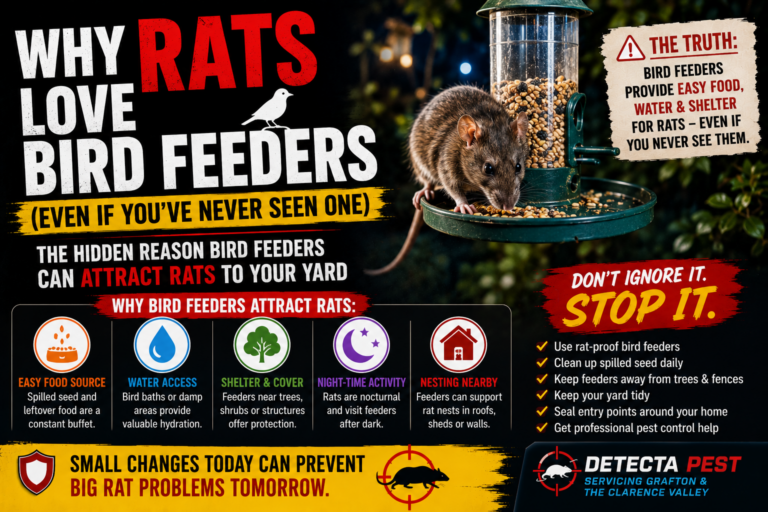
But birds aren’t always the only ones turning up. Bird feeders can attract rats too, even if you’ve never actually laid eyes on one. Across Grafton, the Clarence Valley and surrounding parts of NSW, plenty of homeowners are unknowingly setting up a perfect feeding spot for rodents, just by feeding the birds.
If you’ve noticed signs of rats but can’t work out why, your bird feeder might be playing a bigger part than you’d think.
Why Are Rats Attracted to Bird Feeders?
Bird Seed Is an Easy Food Source
Rats will eat almost anything, but seeds and grains rank high on the list. Most commercial bird seed mixes are full of sunflower seeds, millet, cracked corn and wheat — plenty of energy for a rodent. Unlike a lot of natural food sources, a feeder tops up night after night. Once rats find it, they tend to keep coming back.
Spilled Seed Is the Bigger Problem
Often it’s not the feeder itself causing the issue. It’s what ends up on the ground underneath it. Birds drop seed while they feed, and wind scatters more of it. Even a small amount left behind each day adds up to a steady food source, and rats work that out fast. Once seed keeps accumulating, they’ve got little reason to look anywhere else.
Rats Usually Visit After Dark
A lot of homeowners assume their feeder isn’t attracting rats simply because they’ve never seen one. But rats are mostly nocturnal. Birds feed during the day, and rats move in after sunset to clean up whatever’s left. By morning, there’s often no obvious trace, unless you know what to look for.
Why Bird Feeders Can Cause Ongoing Rat Problems
Rats Remember Reliable Food Sources
Rats have good memories. Once they find a dependable food source, they’ll keep using the same route each night. Over time, if the property also offers water and shelter, they may end up nesting close by. A bird feeder can end up being just one part of a much bigger rodent problem.
Nearby Shelter Makes Things Worse
Feeders are often placed near gardens or trees, which is exactly what encourages native birds in the first place. Unfortunately, that same greenery gives rats good cover too — thick shrubs, climbing vines, a timber retaining wall, a wood pile, a shed, a compost area. The shorter the distance between shelter and food, the more attractive the whole yard becomes.

How Can You Tell If Rats Are Visiting Your Bird Feeder?
Seed Disappears Faster Than Expected
If you’re topping up the feeder constantly despite only seeing a handful of birds during the day, rodents may be helping themselves overnight. This shows up a lot in cooler months, when natural food is scarcer.
Droppings Around the Feeder
Small, dark droppings beneath or near the feeder are one of the clearest signs. You might also spot them along a nearby fence, path, or garden bed.
Chewed Seed Bags
If you’re storing bird seed in the garage or shed, rats will chew straight through the packaging to get to it. Even an unopened bag can draw them in, just from the scent. Sealed containers are always a better bet than the original bag.
Security Cameras Capture Night Visitors
A lot of homeowners only find out after checking their motion-activated camera footage. It’s often a surprise just how regularly rats are actually visiting.
Do Bird Feeders Attract Rats in Grafton and the Clarence Valley?
Warm Conditions Support Year-Round Activity
The climate around Grafton and the Clarence Valley lets rats stay active most of the year. Mild winters, warm temperatures, and plenty of residential gardens all work in their favour. Properties near bushland, farmland or waterways often see even more activity, since rats move freely between natural habitat and suburban food sources.
Large Gardens Offer Everything Rats Need
Around Grafton and the Clarence Valley, we often see properties with fruit trees, a vegie patch, a compost bin, an outdoor entertaining area and a water source all in the one yard. Add a bird feeder into that mix and a rat can find food, water and shelter without ever leaving the block.
How Can You Stop Bird Feeders From Attracting Rats?
Clean Up Spilled Seed Every Day
One of the most effective things you can do is clear fallen seed before dark. A quick sweep or rake underneath the feeder each day stops food from building up. Less food overnight means less reason for rats to stick around.
Choose Better Feeder Designs
Some feeders are built to cut down on waste — they catch dropped seed, limit spillage, and stop large amounts from hitting the ground. Better for the birds, and better for keeping rats away.
Feed Smaller Amounts
Rather than loading the feeder up, put out only what the birds are likely to eat during the day. That way there’s less left over once the sun goes down.
Store Bird Seed Securely
Keep seed in a sealed plastic or metal container. Don’t leave open bags sitting in the shed, garage, or an outdoor storage box. Proper storage keeps rats away from both the seed and the smell of it.
Look Beyond the Bird Feeder
Remove Other Food Sources
A bird feeder rarely attracts rats all on its own. If the rest of the property is offering food too, they’re far more likely to settle in. Check for fallen fruit, pet food left out, a compost bin, a rubbish bin with a loose lid, or BBQ grease and scraps hanging around.
If you think your yard might have a few hidden attractants, 12 Things Around Your Home That Attract Rats Without You Knowing covers a lot of the features homeowners tend to miss.
Eliminate Easy Water Sources
Food’s only half the equation. Rats need regular water too. Check for a pet’s water bowl, a pool, a bird bath, a leaking tap, or a decorative pond.
If you leave water out for pets overnight, Is Your Dog’s Water Bowl Attracting Rats At Night? is worth reading. And if there’s a pool on the property, Why Rats Keep Drinking From Your Swimming Pool (And How To Stop Them) explains how water sources shape rat behaviour more than most people expect.
Reduce Shelter Around the Garden
Keep vegetation maintained. Trim shrubs back from fences and buildings, clear unnecessary clutter, and keep firewood stored away from the house. Fewer hiding spots makes the whole property less inviting.
When Should You Call a Professional Rat Control Service?
If you’re still seeing signs of activity after cleaning up seed and tidying the yard, it’s probably time to get someone in. Worth calling in a specialist if you’re noticing droppings turning up regularly, rats seen in the garden at night, scratching in the walls or ceiling, chewed wiring or outdoor equipment, or damage inside a shed or roof space.
A proper inspection can find where rats are getting in, locate the nest, and set out an effective long-term plan.
Bird Feeder Rat Prevention Checklist
- Sweep up fallen bird seed every day
- Feed only the amount birds will eat during daylight hours
- Use bird feeders that minimise seed spillage
- Store bird seed in sealed containers
- Secure rubbish bin lids
- Pick up fallen fruit promptly
- Keep compost bins well maintained
- Trim dense vegetation around the garden
- Repair leaking taps and irrigation systems
- Check regularly for signs of rodent activity
Simple, consistent upkeep means you can keep enjoying the native birds without giving rats a free feed as well.
Trusted Sources for Further Information
- NSW Health – information on rodents, hygiene and disease prevention
- CSIRO – research into rodent behaviour and integrated pest management
- NSW Department of Primary Industries – advice on rodent management and prevention
Need Professional Rat Control in Grafton or the Clarence Valley?
A bird feeder doesn’t have to become a permanent food source for rats. Cut down the seed waste, remove nearby attractants, and keep the yard tidy, and you can keep the birds coming without inviting rodents along too.
Detecta Pest provides professional Rat Control and Pest Control services throughout Grafton, the Clarence Valley and surrounding NSW communities. Our experienced team can work out why rats keep returning, find the entry points, and put together a practical, long-term solution for your home.
If you’ve noticed ongoing rodent activity around your garden or bird feeder, get in touch with Detecta Pest for expert advice and reliable rat control.