Compost Bins: A Hidden Rat Magnet in Australian Backyards
Composting is one of the best ways to cut down household waste and build up good soil for the garden. It’s environmentally sound, it’s popular, and it’s a common fixture in backyards across Grafton, the Clarence Valley and surrounding parts of NSW.
But a poorly managed compost bin can also turn into a food source for rats.
A lot of homeowners are surprised to learn it’s not really the bin itself that draws rodents in — it’s what goes into it, and how well it’s looked after. If your compost has food scraps sitting in it, too much moisture, or easy access points, it can bring rats onto the property after dark.
The good news is you don’t have to give up composting altogether. A few practical changes let you keep producing good compost while making the yard a lot less appealing to rats.
Why Do Rats Like Compost Bins?
Compost Bins Contain Food
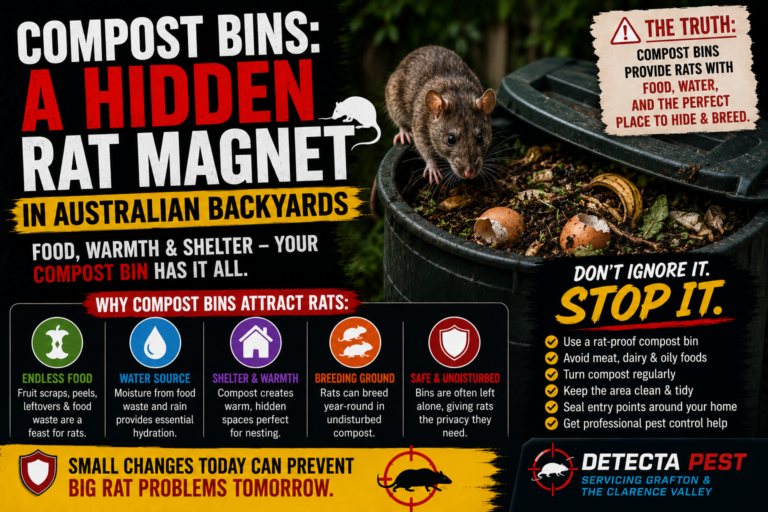
Rats are opportunistic feeders and will eat almost anything. A compost bin usually has plenty on offer — fruit scraps, vegetable peelings, bread, rice, pasta, grain products. As all that breaks down, it gives off strong odours that rats can pick up from a fair distance. If the bin’s easy to get into, they’ll keep coming back night after night.
Compost Provides Shelter
A compost pile isn’t just food. It’s shelter too. As it breaks down, compost generates warmth, especially in bigger bins, and combined with the cover of all that organic material, it creates a fairly comfortable spot for rats to hide during the day. Left undisturbed, they may even nest underneath or beside the bin.
Moisture Makes Compost Even More Attractive
Rats need water daily. A damp compost bin often gives them enough moisture that they don’t need to look elsewhere. Put food, shelter and water together in the one bin, and you’ve covered nearly everything a rat needs to survive.
Are Compost Bins Commonly Responsible for Rat Problems?
A compost bin on its own doesn’t usually cause an infestation. More often it’s one part of a backyard that’s already offering water, shelter, and other food sources. Think bird feeders, fallen fruit, pet food left out, outdoor rubbish, a firewood stack, dense vegetation. Put those together with the compost bin and the whole yard becomes a lot more attractive to rodents.
If you’re wondering what else might be drawing rats onto the property, 12 Things Around Your Home That Attract Rats Without You Knowing covers a lot of the hidden attractants homeowners tend to miss.

What Can You Put in a Compost Bin Without Attracting Rats?
Green Waste Is Usually Fine
Most bins can safely handle grass clippings, leaves, garden prunings, vegetable scraps, coffee grounds and tea leaves. These break down well and rarely cause problems when the bin’s managed properly.
Avoid High-Risk Food Waste
Some items are far more attractive to rodents and are worth keeping out altogether — meat, fish, dairy, cooking oils, fat, bones, large amounts of bread, or leftover cooked meals. These give off strong odours and can bring in rats fast, along with other pests. Sticking to good composting practice helps the garden and keeps rodents away at the same time.
How Can You Tell If Rats Are Visiting Your Compost Bin?
Burrows Around the Base
One of the clearest signs is finding small tunnels or burrows underneath or beside the bin. Rats like digging beneath structures where they feel protected.
Droppings Nearby
Droppings around the compost area point to regular visits. You might also spot them along a fence line or garden bed leading up to the bin.
Compost Looks Disturbed
If the compost looks scattered or dug through each morning, rodents are probably searching through it overnight.
Night-Time Activity
Motion-sensor cameras often pick up rats climbing into compost bins after dark. Since they’re nocturnal, most homeowners never see this happening themselves.
Why Compost Bins Can Attract Rats in Grafton and the Clarence Valley
Warm Conditions Support Rodent Activity
The mild climate across Grafton and the Clarence Valley keeps rats active for most of the year. Warm weather also speeds up decomposition, which means more food odour is released and more reason for rats to come sniffing around.
Large Gardens Offer Plenty of Shelter
In many homes we inspect, there’s a vegie patch, a fruit tree or two, a shed, thick hedges and timber fencing — all good cover for rats moving between the compost bin and other food or water sources. Properties near bushland, farmland or waterways often see even more pressure, as rats move freely between the bush and the backyard.
How Can You Stop Rats From Being Attracted to Your Compost Bin?
Use a Rodent-Resistant Compost Bin
Look for a bin with a secure lid, solid sides, a firm base and no large gaps. Where you can, sit it on concrete or pavers rather than straight onto soil — that cuts down the chance of rats burrowing underneath.
Turn Compost Regularly
Turning the compost speeds up decomposition and disturbs any rats trying to shelter inside. Well-turned compost also produces less odour.
Balance Green and Brown Materials
A healthy pile needs a mix of green material — vegetable scraps, fresh grass, coffee grounds — and brown material like dry leaves, cardboard, shredded paper and small twigs. Get that balance right, and the compost breaks down efficiently without turning wet or smelly.
Avoid Overfilling
Don’t let the bin overflow. Keeping the lid shut and the contents contained cuts off easy access for rodents.
Remove Other Rat Attractions Around Your Backyard
Clean Up Fallen Fruit
Fruit trees are common throughout the Clarence Valley, and fallen fruit left on the ground is an easy meal for a rat. Collect it regularly before it starts to rot. If you’ve got productive fruit trees, Are Your Fruit Trees Feeding Rats Without You Realising? explains how orchards and backyard trees often play into rodent activity.
Secure Outdoor Rubbish
An overflowing bin is another reliable food source. Make sure lids close tightly and clean bins regularly to cut down on lingering odour.
Eliminate Standing Water
Even with food limited, rats still need water. Check for pet water bowls, bird baths, leaking taps, decorative ponds and pools. If there’s a pool on the property, Why Rats Keep Drinking From Your Swimming Pool (And How To Stop Them) explains why pools often end up part of a rat’s nightly routine.
Why Do Rats Keep Returning?
Once rats find a backyard offering reliable food and shelter, they’ll keep coming back until that changes. Even with better compost management, they might still find bird seed under a feeder, pet food left outside, BBQ grease, a firewood stack or thick vegetation nearby.
For a better look at recurring problems, Why Do Rats Keep Coming Back to the Same House? explains why some properties keep attracting rodents despite repeated efforts to fix it.
When Should You Call a Professional Rat Control Service?
Good compost management usually keeps the risk down. That said, it’s worth calling in professional help if you’re seeing rats regularly around the compost area, droppings turning up throughout the yard, burrows under structures, rodents getting into sheds or roof spaces, or ongoing activity despite doing everything right with maintenance.
A proper inspection identifies nesting sites, entry points, and whatever’s still encouraging rats to stick around.
Compost Bin Rat Prevention Checklist
- Use a compost bin with a secure lid
- Position compost bins on concrete or pavers where possible
- Avoid composting meat, dairy and oily foods
- Turn compost regularly
- Maintain a good balance of green and brown materials
- Pick up fallen fruit promptly
- Store rubbish securely
- Repair leaking taps and irrigation systems
- Trim overgrown vegetation around the compost area
- Monitor your property for signs of rodent activity
These simple habits let you keep composting successfully while giving rats a lot less reason to move in.
Trusted Sources for Further Information
- NSW Health – information on rodents, hygiene and disease prevention
- CSIRO – research into rodent behaviour and integrated pest management
- NSW Department of Primary Industries – guidance on rodent prevention and pest management
- Sustainable Gardening Australia – best practices for home composting
Need Professional Rat Control in Grafton or the Clarence Valley?
A compost bin doesn’t have to attract rats. With the right maintenance and by removing other food, water, and shelter around the property, you can keep composting while cutting down the chances of rodent activity.
Detecta Pest provides professional Rat Control and Pest Control services throughout Grafton, the Clarence Valley and surrounding NSW. Our experienced team can inspect your property, work out why rodents are returning, and recommend practical, long-term solutions suited to your situation.
If you’ve noticed rats around your compost bin or anywhere else on the property, get in touch with Detecta Pest for expert advice and reliable rodent control.