
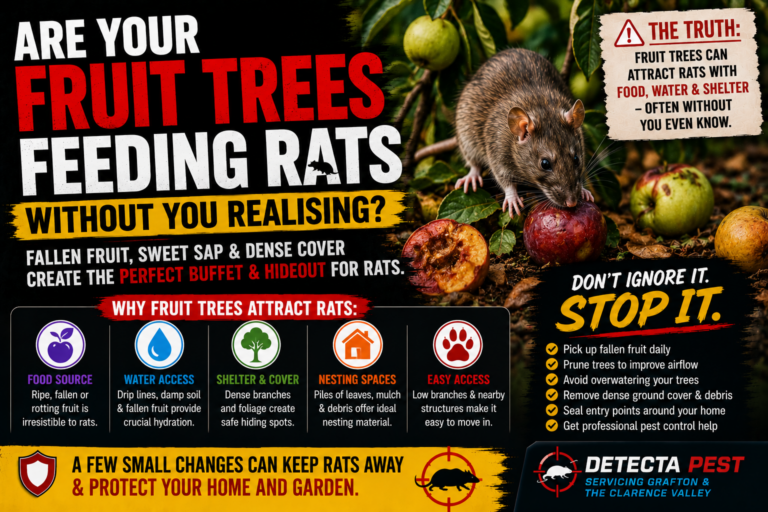
Are Your Fruit Trees Feeding Rats Without You Realising?
Fruit trees are a great addition to any Australian backyard. They give you fresh produce, some shade, and they bring native wildlife in too. Across Grafton, the Clarence Valley and surrounding parts of NSW, it’s common to see citrus, mango, avocado, mulberry and stone fruit growing in the average backyard.
But fruit trees can also become an unexpected food source for rats.
A lot of homeowners assume rats only come after scraps or rubbish. In reality, a tree that regularly drops ripe fruit can feed a rat quite well without it ever needing to come near the house.
The good news is you don’t have to pull the tree out. Manage it properly, and you can keep the harvest while making the yard a lot less appealing to rodents.
Why Are Rats Attracted to Fruit Trees?
Fallen Fruit Is an Easy Meal
Rats will eat a wide range of fruit. Once it hits the ground, it goes soft, sweet, and easy to eat — even fruit that’s a bit damaged or overripe is still attractive to a rodent. Citrus, mangoes, mulberries, figs, peaches, plums, apples, pears, guavas, avocados — all of it works. If fruit’s left on the ground overnight, it’s a dependable feed rats will keep coming back for.
Overripe Fruit Left on the Tree
Fruit doesn’t even need to fall to attract them. Rats climb well and can get up into the branches to feed on ripe fruit still hanging there. Often they’re onto it before you’ve even realised it’s ready for picking.
Fruit Trees Provide Shelter
A big fruit tree offers more than food. Dense branches and foliage create safe travel routes rats use to move between properties without being spotted. Combined with the fences and garden beds nearby, a fruit tree becomes part of a whole network of sheltered pathways rats use every night.
What Types of Fruit Trees Attract Rats?
Rats aren’t fussy. If a tree’s producing edible fruit, there’s a good chance they’ll check it out. Lemon, orange, mandarin, lime, mango, mulberry, fig, loquat, peach, nectarine — none of these are off the list. It’s not about the species. It’s about the food being there.

Why Fruit Trees Can Lead to Ongoing Rat Problems
They Provide a Reliable Food Source
Unlike a rubbish bin that’s emptied weekly, a fruit tree keeps producing over a long stretch. As different fruit ripens through the year, rats can have access to food for months at a time. That keeps them coming back, and over time it can support a bigger local population.
Fruit Trees Are Often Combined with Other Attractions
Most backyards have more going on than just the fruit tree. A compost bin, a bird feeder, pet food left out, a vegie patch, a pool, thick shrubs, a firewood stack — put a few of these together with the fruit tree and the whole property becomes a lot more appealing to rats.
If you’re not sure what else might be drawing them in, 12 Things Around Your Home That Attract Rats Without You Knowing covers several attractants that are easy to overlook.
How Can You Tell If Rats Are Feeding on Your Fruit Trees?
Fruit Has Bite Marks
One of the first signs is fruit with irregular chew marks. Birds tend to peck small holes, but rats leave bigger gnaw marks from their front teeth. Look out for half-eaten fruit, fruit with multiple bite marks, or fruit disappearing before it’s even fully ripe.
Fruit Disappears Overnight
If fruit seems to vanish between evening and morning, rats are probably visiting while everyone’s asleep. This shows up a lot during peak ripening.
Droppings Around the Tree
Small, dark droppings at the base of the tree, or along a nearby fence, usually point to regular activity. You might also spot them on retaining walls, sheds or paths leading to the tree.
Activity After Dark
Motion-activated cameras often catch rats climbing trees through the night. Since they’re nocturnal, most homeowners never see it happen in person.
Why Fruit Trees Can Attract Rats in Grafton and the Clarence Valley
The Climate Supports Healthy Fruit Production
The warm climate across Grafton and the Clarence Valley lets a lot of fruit trees thrive. Long growing seasons mean fresh fruit is around for extended stretches, which gives rodents plenty of regular feeding opportunities.
Rural and Semi-Rural Properties Increase Rodent Movement
A lot of homes in this region sit near bushland, farms, orchards, rivers or open paddocks. These environments naturally support rodent populations that move into residential gardens once food’s available. In our experience, properties backing onto this kind of country tend to see more consistent rat pressure than a typical suburban block.
How Can You Prevent Fruit Trees From Attracting Rats?
Pick Fruit Early
Don’t leave ripe fruit hanging longer than you need to. Harvesting promptly cuts down what’s available to rodents, and it usually improves fruit quality as well.
Remove Fallen Fruit Every Day
One of the simplest things you can do is collect fallen fruit before nightfall. Leaving it overnight gives rats an easy feed, and even small amounts left regularly are enough to bring them back.
Prune Trees Regularly
A well-maintained tree is less attractive to rodents. Regular pruning improves airflow, makes harvesting easier, cuts down on dense hiding spots, and limits easy climbing routes. Trim back branches touching fences, sheds or the roofline, since that’s exactly the kind of bridge rats use to move between structures.
Protect Fruit Where Practical
Depending on the tree, fruit bags or netting can help cut down damage from birds and rodents alike. Just make sure you’re using wildlife-friendly netting so native animals aren’t put at risk.
Look for Other Food and Water Sources
Compost Bins Can Reinforce the Problem
Fruit scraps often end up in the compost bin, and if it’s not managed well, that becomes another food source in its own right. Compost Bins: A Hidden Rat Magnet in Australian Backyards is a good read if you’re composting regularly and want to keep it rat-free.
Outdoor Water Sources Matter Too
Food’s only half the picture. Rats need water as well. Check for a pet water bowl, a bird bath, a leaking tap, a decorative pond, or a pool. If there’s a pool on the property, Why Rats Keep Drinking From Your Swimming Pool (And How To Stop Them) explains how water sources factor into rat behaviour.
Why Do Rats Keep Returning to Fruit Trees?
Once rats find a dependable food source, they’ll usually keep coming back until that changes. Even after you’ve harvested the fruit, they might still find bird seed under a feeder, scraps around the BBQ, pet food left outside, an accessible bin, or thick vegetation offering shelter.
If you’re dealing with recurring visits, Why Do Rats Keep Coming Back to the Same House? explains why some properties keep attracting rats no matter what homeowners try.
When Should You Contact a Professional Rat Control Service?
Worth getting a professional involved if you’re seeing rats feeding on fruit every night, droppings turning up regularly around the trees, rodents getting into roof spaces or sheds, chewed wiring or garden equipment, or ongoing activity despite doing everything right with garden maintenance.
Professional rat control identifies nesting sites, entry points and whatever’s still bringing rats back to the property.
Fruit Tree Rat Prevention Checklist
- Harvest ripe fruit promptly
- Remove fallen fruit every day
- Prune trees regularly
- Trim branches away from roofs and fences
- Store rubbish in bins with secure lids
- Maintain compost bins properly
- Remove outdoor pet food overnight
- Repair leaking taps and irrigation systems
- Keep gardens tidy and reduce dense vegetation
- Monitor for signs of rodent activity
Regular garden maintenance protects the harvest and makes the yard a lot less attractive to rodents at the same time.
Trusted Sources for Further Information
- NSW Health – information on rodents, public health and disease prevention
- CSIRO – research on rodent behaviour and integrated pest management
- NSW Department of Primary Industries – guidance on rodent prevention and pest management
- Local NSW councils – advice on composting, waste management and responsible gardening practices
Need Professional Rat Control in Grafton or the Clarence Valley?
Fruit trees are a great feature in any Australian garden, but they shouldn’t become an ongoing food source for rats. Harvest promptly, clear fallen fruit, and deal with other food, water, and shelter around the property, and you’ll cut the risk of rodent activity right down.
Detecta Pest provides professional Rat Control and Pest Control services throughout Grafton, the Clarence Valley and surrounding NSW. Our experienced technicians can inspect your property, work out why rats are returning, and recommend practical, long-term solutions tailored to your home.
If you’ve noticed rats feeding on your fruit trees or anywhere else on the property, get in touch with Detecta Pest for expert advice and dependable rodent control.