

Why Do Mice Cause More Damage Than Most Homeowners Realise?
For many homeowners across the Clarence Valley, mice initially seem more annoying than dangerous.
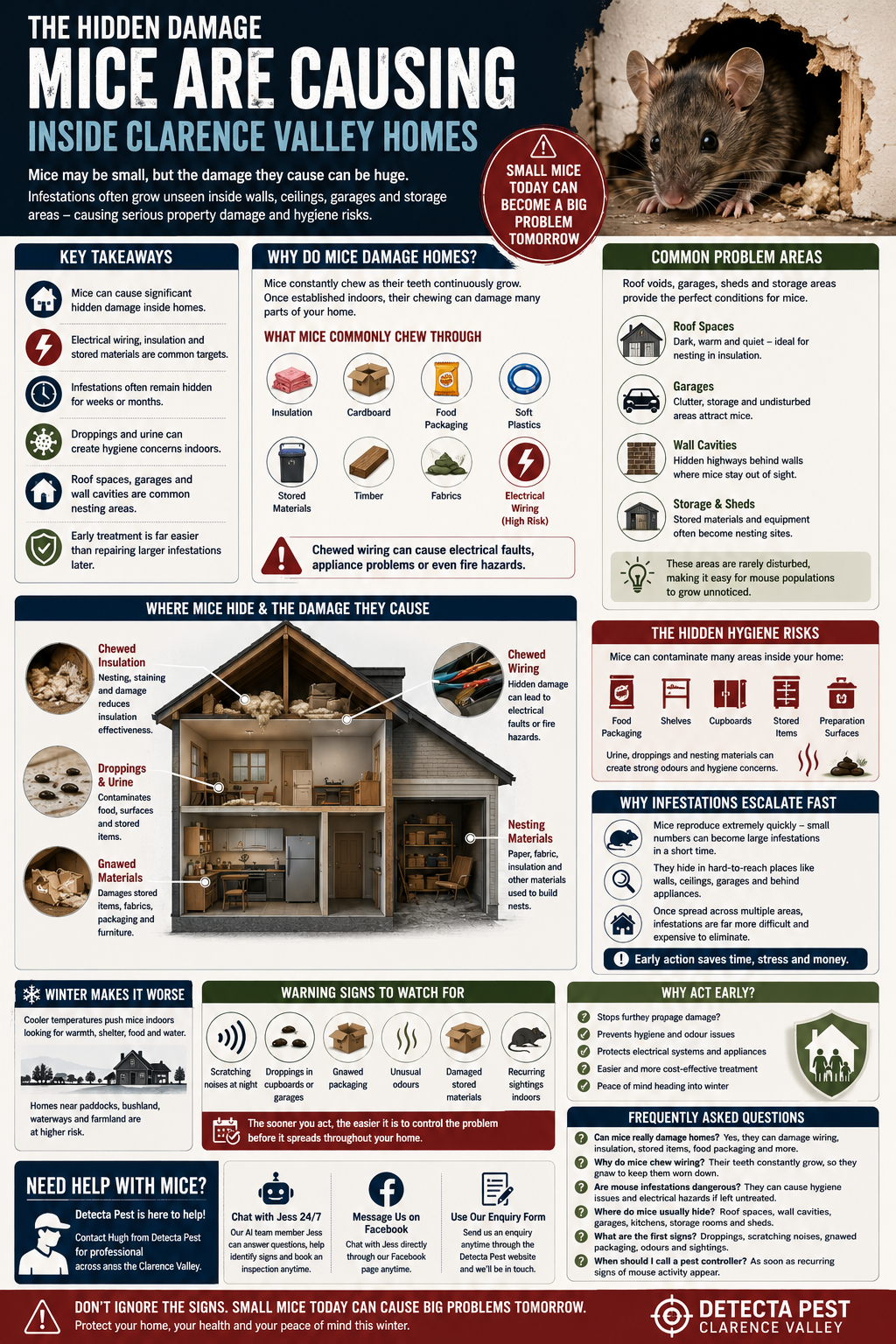
At first, it might only be scratching sounds in the ceiling at night, a few droppings in the garage, or signs that something has been getting into stored food around the pantry.
But once mice become properly established inside a home, the damage they leave behind can quickly become much more serious than most people expect.
Because mice are small, quiet, and mostly active overnight, infestations often continue growing unnoticed inside walls, ceilings, garages, storage rooms, and roof spaces long before homeowners realise how extensive the problem has become.
Key Takeaways
- Mice can cause significant hidden damage inside homes
- Electrical wiring, insulation, and stored materials are common targets
- Mouse infestations often remain hidden for weeks or months
- Droppings and urine can create hygiene concerns indoors
- Roof spaces, garages, and wall cavities are common nesting areas
- Early treatment is usually far easier than repairing larger infestations later
Table of Contents
- Why mice damage homes
- What mice commonly chew through
- Why roof spaces and garages are vulnerable
- The hidden hygiene risks mice create
- Why infestations often go unnoticed
- Why small infestations become larger problems
- What homeowners should watch for
Why Do Mice Damage Homes In The First Place?
Mice constantly chew as part of their normal behaviour.
Their teeth continuously grow, so mice regularly gnaw through materials around the home to keep them worn down. Once mice establish themselves indoors, that chewing can quickly start damaging parts of the property homeowners rarely think about.
What Materials Do Mice Commonly Damage?
Mice regularly chew through:
- insulation
- cardboard
- food packaging
- soft plastics
- stored materials
- timber
- fabrics
More concerningly, mice can also chew electrical wiring hidden inside walls, ceilings, garages, and roof spaces.
That’s one reason mouse infestations should never be ignored once signs begin appearing around the home.
Can Mice Damage Electrical Wiring?
One of the biggest hidden risks with mice inside homes is wiring damage.
Electrical cables running through ceilings, wall cavities, garages, and storage areas often become easy targets once mice begin nesting nearby.
Why Is Wiring Damage So Concerning?
Chewed wiring can eventually create electrical faults, appliance problems, or fire hazards if infestations become severe enough.
Because this damage often occurs inside walls or roof spaces, many homeowners don’t realise there’s a problem until much later.
For homes around the Clarence Valley with older wiring or cluttered roof spaces, hidden mouse activity can sometimes continue for long periods without being noticed.
Why Are Roof Spaces And Garages Common Problem Areas?
Roof voids, garages, sheds, and storage areas provide ideal conditions for mice once they move indoors during winter.
These spaces are often:
- dark
- warm
- quiet
- rarely disturbed
- filled with nesting materials
Stored cardboard, insulation, fabrics, and cluttered storage areas can quickly become nesting environments once mice establish themselves indoors.
Why Do Mouse Infestations Often Start Quietly?
One of the biggest challenges with mice is how quietly infestations develop.
Because mice are mostly active overnight, homeowners often don’t notice the problem until activity becomes much heavier around the property.
By the time scratching sounds, droppings, or visible sightings begin occurring regularly, mouse populations may already be well established inside the home.
We explore how infestations escalate so quickly further in our article:
“Why Mouse Problems Can Spread So Quickly Across Clarence Valley Homes.”
What Hygiene Problems Can Mice Create Indoors?
Beyond property damage, mice can also create major hygiene concerns once infestations spread through kitchens, pantries, storage rooms, and food preparation areas.
Droppings and urine can contaminate:
- food packaging
- shelves
- cupboards
- stored items
- preparation surfaces
Why Do Mouse Infestations Create Strong Odours?
As infestations grow, urine, droppings, nesting materials, and hidden activity inside walls or ceilings can begin creating unpleasant smells around the property.
In some cases, homeowners first realise they have a mouse problem because of unusual odours coming from roof spaces, garages, or storage areas.
Why Do Small Mouse Problems Often Become Much Worse?
Many homeowners understandably delay dealing with mice if the problem initially seems minor.
But because mice reproduce extremely quickly, relatively small infestations can become much larger problems surprisingly fast once nesting areas become established indoors.
Why Are Mice So Difficult To Eliminate Once Established?
Mice are extremely good at hiding inside:
- wall cavities
- roof spaces
- garages
- kitchens
- storage rooms
- behind appliances
Once populations spread throughout multiple areas of a property, removing the infestation becomes far more difficult than dealing with the problem early.
That’s one reason local pest professionals often recommend acting quickly once recurring signs of mice begin appearing indoors.
Could Winter Conditions Be Making Mouse Problems Worse?
As temperatures continue dropping across the Clarence Valley, homes become increasingly attractive to mice searching for warmth and shelter.
Garages, ceilings, wall cavities, and storage areas provide protection from colder outdoor conditions, particularly around semi-rural properties near paddocks, bushland, waterways, or farmland.
Why Are More Clarence Valley Homeowners Seeing Mice This Winter?
Local pest controllers across the Clarence Valley are already reporting increased mouse activity unusually early this winter.
While several factors may be contributing, cooler temperatures and growing mouse populations around surrounding rural areas may be pushing more mice indoors searching for food and shelter.
We explore this broader seasonal trend further in our article:
“It’s Only Mid May — So Why Are Mouse Numbers Already Rising Across the Clarence Valley?”
What Signs Should Homeowners Watch For?
Many mouse infestations remain hidden long before homeowners realise how serious the problem has become.
Some of the most common warning signs include:
- scratching noises at night
- droppings around cupboards or garages
- gnawed packaging
- unusual odours
- damaged stored materials
- recurring sightings indoors
Why Is Early Action So Important?
The earlier mouse activity is identified, the easier it’s usually to control before infestations spread further throughout the property.
Because mice reproduce so quickly, delaying treatment often allows populations to continue expanding quietly inside walls, ceilings, garages, and storage areas throughout winter.
Need Help With Mouse Problems Around Your Clarence Valley Property?
If you’re already noticing signs of mice around your home, shed, garage, or storage areas, acting early is usually the best way to prevent a much larger infestation developing later in winter.
If you are experiencing mouse problems in the Clarence Valley, contact Hugh from Detecta Pest for professional advice and inspections.
You can also speak with our AI team member Jess 24/7 through the Detecta Pest website or Facebook page. Jess can answer questions, help identify common signs of mouse activity, and even book you in for an inspection anytime.
If you’d prefer, you can also use the enquiry form on the Detecta Pest website to send through an enquiry whenever it suits you.
Frequently Asked Questions
Can mice really damage homes?
Yes. Mice can damage wiring, insulation, stored materials, food packaging, and other parts of the property once infestations become established.
Why do mice chew electrical wiring?
Mice constantly gnaw to keep their teeth worn down, and wiring inside walls or ceilings often becomes an easy target.
Are mouse infestations dangerous?
Mouse infestations can create hygiene concerns, contaminate food storage areas, and potentially damage electrical systems if left untreated.
Where do mice usually hide inside homes?
Common hiding areas include roof spaces, garages, wall cavities, kitchens, storage rooms, and sheds.
Why do mouse infestations often go unnoticed?
Mice are mostly active at night and are extremely good at staying hidden inside walls, ceilings, and storage areas.
What are the first signs of mice inside the home?
Common signs include droppings, scratching sounds, damaged food packaging, unusual odours, and recurring sightings indoors.
Can mice create unpleasant smells?
Yes. Urine, droppings, and nesting materials can create strong odours once infestations become established.
When should I contact a pest controller about mice?
It’s best to arrange an inspection as soon as recurring signs of mouse activity begin appearing around the property.